
Lemon-scented tea tree
Leptospermum petersonii F. M. Bailey
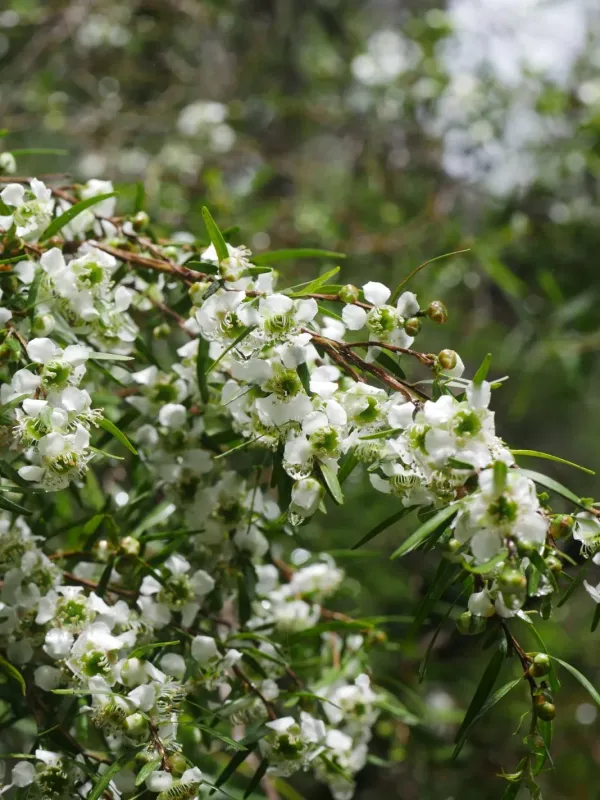
Description
Sowing dates
Seeds of Leptospermum petersonii are sown in spring using a light, well-draining substrate enriched with sand. Since the seeds are extremely small, they should not be buried deeply; instead, they are lightly dusted with soil and kept consistently moist until germination occurs.
For commercial production, vegetative propagation via semi-hardwood cuttings is the preferred method. Cuttings are harvested in late summer or early autumn and treated with rooting hormones to ensure a higher success rate in establishing new plants.
Before moving seedlings to open ground or greenhouses, a hardening-off period is essential. This involves gradually adjusting the plants to lower temperatures and increased exposure to outdoor conditions, as young specimens are highly sensitive to moisture stress.
Planting density depends on the specific commercial goal: for essential oil extraction, a density of 10,000 to 15,000 plants per hectare is common. Row spacing must allow for easy access of agricultural machinery for plantation maintenance and harvesting.
As a member of the Myrtaceae family, this species exhibits slow early growth. Strict weed management during the first year is vital to prevent competition and allow the development of a robust and healthy root system.
Growing requirements
Leptospermum petersonii thrives in sunny locations that are sheltered from strong winds. The soil must possess excellent drainage; waterlogged conditions are fatal to the plant. Slightly acidic, sandy loam soils are considered ideal for optimal growth.
This species is highly thermophilic and lacks tolerance for freezing temperatures. In regions with cold winters, the crop must be cultivated in protected environments or greenhouses, as even light frosts can cause significant damage to the plant's health.
Atmospheric humidity plays a critical role in development. Although the plant is drought-tolerant once established, regular irrigation during hot summer months significantly boosts the production of biomass and the concentration of aromatic oils.
Fertilization should be balanced, with a specific emphasis on keeping phosphorus levels low. Excessive fertilization can negatively impact the plant's natural essential oil profile, leading to a loss of its distinct lemon fragrance, so moderation is key.
Native to Australia, the species is perfectly adapted to specific sub-tropical environments. When cultivated outside its native range, growers must replicate these mild climate conditions to ensure the plant reaches its full agricultural potential.
Yield
The economic value of this crop is primarily derived from its leaves, which are rich in essential oils containing high levels of citronellal. Yield depends heavily on the age of the plantation and the consistency of the chosen agrotechnical practices.
The first full harvest of green biomass can typically be achieved within two to three years of planting. Periodic pruning is essential as it stimulates bushiness, effectively increasing the total surface area and volume of the harvestable foliage.
Oil yields correlate strongly with light exposure. Plants receiving maximum sunlight during the growing season consistently produce a higher quality and quantity of aromatic compounds compared to those grown in partial shade.
Management of irrigation is essential to strike a balance between high biomass growth and the desired chemical composition of the oil. Excess water may increase foliage weight but can dilute the concentration of active volatile components.
Average yield per hectare varies significantly depending on whether the harvesting process is manual or mechanical. Professional facilities emphasize purity during harvest, as extraneous matter can degrade the quality of the final oil extract.
Main diseases and pests
Scale insects and mealybugs are the most common pests for this crop, as they feed on the sap of young shoots. Left unchecked, infestations can severely weaken the plant and reduce its natural resistance to environmental stress.
Root rot, generally caused by poor drainage or overwatering, remains the most significant threat to Leptospermum health. Once pathogens take hold in the root system, the decline of the plant is often rapid and difficult to reverse.
Powdery mildew can affect the leaves in conditions characterized by high humidity and poor air circulation. Proper plant spacing and good ventilation in greenhouse settings are the most effective preventative measures against fungal outbreaks.
When pests are detected, the use of biological control agents or targeted contact insecticides is recommended. It is important to adhere to safety intervals regarding chemical use to prevent residues from ending up in the final oil product.
Regular monitoring for wilting or leaf deformation allows for early detection of potential outbreaks. Healthy plants, characterized by strong aromatic output, are naturally more resilient against recurring pest and disease cycles.
Harvesting
Harvesting is performed by trimming the tips of the shoots, where the concentration of essential oil is at its peak. The ideal time for harvesting is during dry, sunny weather in the middle of the day to preserve the delicate aroma.
Harvested foliage should be processed or dried immediately in shaded, well-ventilated areas. Leaving raw material in piles can lead to heating and fermentation, which significantly lowers the quality and market value of the essential oil.
Both fresh and slightly wilted leaves are suitable for distillation. The primary extraction method is steam distillation, which effectively captures the aromatic compounds while maintaining the therapeutic integrity of the oil.
During the harvest, care must be taken to preserve the main framework branches to ensure the plant's longevity. Since the shrub is highly resilient, it can recover well from heavy pruning, allowing for multiple harvests within a single season.
The final product—lemon-scented oil—is a sought-after commodity in perfumery, cosmetics, and aromatherapy. Rigorous sorting and quality control before processing are essential to maintain the product's premium position in the global market.