
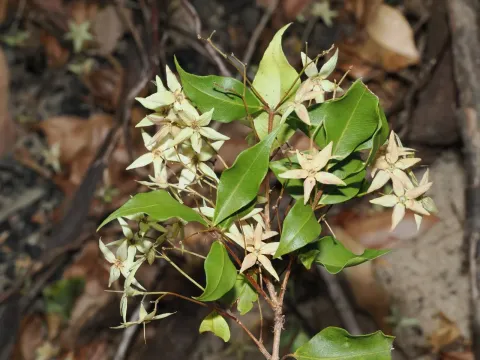
Backhousia
Backhousia
Backhousia belongs to the Myrtaceae family, comprising several species of evergreen trees and shrubs native to the rainforests of eastern Australia.
What the section contains

Backhousia
The plant thrives in well-draining, nutrient-rich soil that is slightly acidic. It requires a location with protection from harsh winds and partial shade to full sun exposure.
It is sensitive to extreme cold and frost, which makes it ideal for subtropical climates or container gardening in cooler zones where it can be moved indoors.
Consistent watering is essential for maintaining growth, but soil must remain well-aerated to prevent root rot, as the plant does not tolerate waterlogged conditions.
These plants are highly sought after for their leaves, which contain one of the highest concentrations of citral, providing a potent and refreshing lemon scent.
Harvesting Backhousia leaves is a year-round activity in suitable climates, though peak production occurs during the warm summer months of active growth.
Pruning is the primary method of harvesting, which encourages bushier growth and creates a more convenient structure for the following seasons.
After being gathered, the leaves are dried slowly in shaded areas or distilled immediately to ensure the high-quality essential oil profile remains intact.
Commercially, the plant is harvested for the food and beverage industry, natural skincare formulations, and advanced pharmaceutical aromatherapy products.
Sustainable harvesting practices involve removing only mature leaves from the outer canopy to allow the plant to recover and photosynthesize efficiently.