
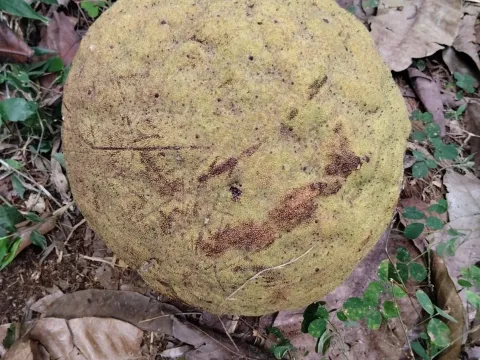
Treculia
Treculia
Treculia (Treculia africana), a member of the Moraceae family, is a large evergreen tree native to tropical Africa. It thrives in lowland rainforests and along riverbanks, requiring a consistent, warm, and humid environment for optimal growth throughout the year.
What the section contains

Treculia
The tree requires deep, well-draining, and nutrient-rich soils to reach its full potential. It is sensitive to waterlogging, despite its natural affinity for riparian habitats; therefore, proper soil drainage is essential for plantation health.
Temperature is a critical factor for successful cultivation, with an ideal range between +22°C and +30°C. Treculia cannot survive in freezing temperatures and suffers significant damage if exposed to cold, arid winds or frost.
While seedlings may benefit from partial shade in their initial growth stages, mature trees require significant exposure to sunlight to support the energy-intensive process of producing large, heavy fruiting bodies.
The tree is characterized by a dense, spreading crown and can reach heights of up to 30 meters. Its unique biological feature involves cauliflory, where large, spongy fruiting heads develop directly from the trunk or thicker branches.
The primary economic value of Treculia lies in its vast quantity of seeds, which are highly nutritious and rich in protein and starch. A single mature tree can produce a substantial harvest of heavy, nutrient-dense fruits each year.
The seeds are a staple food for many communities, often prepared by boiling or roasting. Once ground into flour, they serve as a versatile ingredient in various dishes, providing a reliable source of energy and minerals.
In addition to food production, the wood of the Treculia tree is prized for its durability and resistance to pests. It is frequently utilized in local carpentry and construction, adding value to the agricultural enterprise.
Yields are maximized through consistent maintenance, including proper spacing to ensure adequate airflow and resource competition management. Under ideal conditions, a healthy orchard can remain productive for several decades.
Integrating Treculia into agroforestry systems provides not only food security but also environmental benefits. Its deep root system helps stabilize riverbanks and prevents soil erosion in moisture-rich landscapes.
Fungal pathogens represent the most significant threat to Treculia, particularly those that target the root system in poorly drained soils. Maintaining proper water management is the most effective way to prevent root rot.
Various insect pests, including stem borers and fruit-attacking larvae, can impact crop quality. Regular scouting and monitoring of the plantation are necessary to implement timely control measures before pests cause widespread damage.
Weed control is essential during the early developmental phases of the tree. Invasive grasses and shrubs can compete for nutrients and light, drastically hindering the growth rate of young Treculia saplings.
Environmental stressors, such as prolonged droughts in traditionally humid regions, can weaken the trees, making them more susceptible to opportunistic viral or bacterial infections spread by insect vectors.
Integrated pest management (IPM) is encouraged in Treculia orchards to minimize the use of heavy chemical pesticides, which helps protect local biodiversity and soil health within the cultivation area.
Harvesting Treculia is a labor-intensive process due to the size and weight of the fruits, which can weigh several kilograms each. Fruits are typically hand-picked once they reach full maturity, indicated by specific changes in skin texture and fragrance.
Post-harvest handling is critical because the fruits are highly perishable in tropical heat. Once collected, the spongy fruiting heads are broken down to extract the numerous seeds, which must then be cleaned and dried.
Sun-drying the seeds is the most common and cost-effective method of preservation. Properly dried seeds can be stored for extended periods, providing a shelf-stable food supply throughout the year.
Safety is a priority during the harvest, as the height of the mature trees requires specialized equipment for reaching the canopy. Proper tools for securing the heavy fruits are necessary to prevent injuries or damage to the harvest.
Timely harvest management is essential to minimize loss. If fruits are allowed to over-mature and fall to the ground, they may quickly decompose or become contaminated, rendering them unsuitable for human consumption.