
Narrow-fruited walnut
Juglans stenocarpa
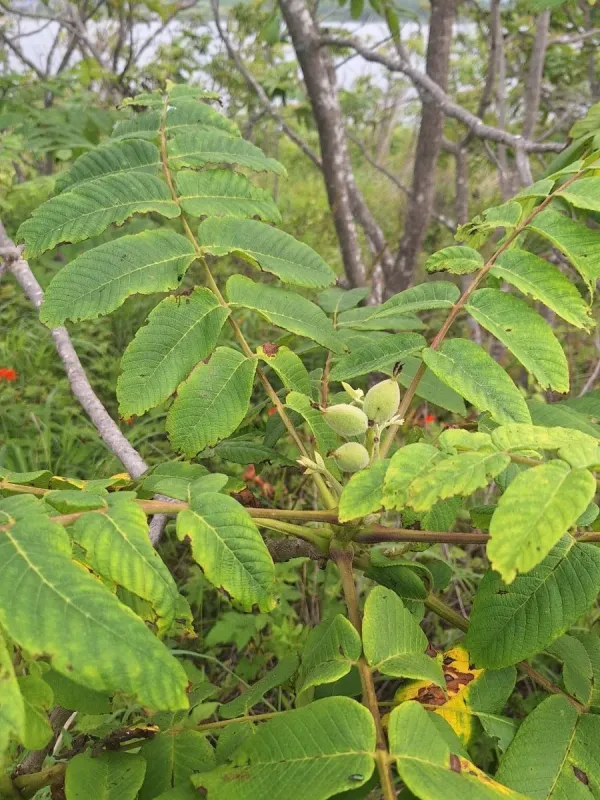
Description
Growing requirements
The narrow-fruited walnut (Juglans stenocarpa) belongs to the Juglandaceae family. This tree is morphologically distinct due to its elongated and narrow fruit shape, which distinguishes it from the more common English walnut variety.
It thrives in temperate climatic zones characterized by sufficient precipitation and moderate seasonal fluctuations. Historically, the species is found in mountain forest ecosystems where it has adapted to specific light and temperature patterns.
Regarding soil requirements, the tree demands deep, fertile, and well-drained substrates. It is sensitive to waterlogging, so sites with poor drainage or high groundwater levels are unsuitable for its development and may lead to root rot.
Light availability is a critical factor for the vigor and health of Juglans stenocarpa. As a heliophilous species, it requires ample direct sunlight to ensure optimal canopy development and to prevent the premature shedding of internal fruit-bearing spurs.
Agrotechnical maintenance includes soil aeration, irrigation during the establishment phase, and periodic pruning to manage the crown structure. Proper hygiene in the orchard is essential to maintain tree longevity and vigor.
Yield
Productivity is contingent upon the age of the tree and the quality of orchard management. Typically, commercial yields begin to stabilize once the tree matures, usually around 7 to 10 years after planting in the field.
Pollination success is a vital component of high yields. Since the species benefits from cross-pollination, maintaining a diverse planting arrangement within the orchard can significantly enhance the nut set and final production figures.
The fruit quality is characterized by high-density kernels rich in unsaturated fats and unique flavor compounds. Market value is determined by the percentage of kernel fill and the ease of extraction from the shell.
Nutrient management through fertilizers, specifically those high in nitrogen and potassium during the growth season, supports heavy bearing. Monitoring foliage health helps in adjusting fertilization strategies to maximize annual crop potential.
As the tree ages, yield patterns may fluctuate, necessitating proactive pruning and structural support if heavy crops are anticipated. Keeping the tree in a balanced state of health is the best way to ensure long-term profitability.
Main diseases and pests
Like many members of the Juglandaceae family, this species is susceptible to various fungal pathogens, particularly in regions with high humidity. Leaf spot and anthracnose are common concerns that require monitoring.
Pests such as the walnut husk fly can significantly impact the quality of the harvest if not managed properly. Integrated pest management strategies, including monitoring traps, are recommended to maintain clean production.
Bacterial blight is another potential threat, often manifesting as dark spots on leaves and fruits during wet springs. Pruning infected branches and using copper-based treatments can help mitigate the spread of the disease.
Grafting and planting resistant clones can offer a sustainable way to handle endemic disease pressure. Regular orchard sanitation, such as removing fallen leaves and mummified fruits, is essential for reducing inoculum sources.
Environmental stress, such as late frosts during the flowering period, can also result in significant crop losses. Site selection and the use of protective measures are crucial for protecting the fragile reproductive structures from damage.
Harvesting
Harvesting should occur as soon as the green hulls begin to crack and the nuts start to fall naturally. Delayed harvest leaves the nuts vulnerable to ground-level humidity, which can degrade quality quickly.
Post-harvest processing involves the immediate removal of hulls to prevent staining the shell and to avoid internal degradation. Mechanized hullers are typically used in commercial operations to speed up the process.
Drying is the most critical post-harvest step. The kernels must be dried until the moisture content is low enough to prevent mold and rancidity. This is achieved through air circulation in specialized drying sheds or mechanical dryers.
Storage must be maintained in cool, dry conditions with adequate ventilation. If properly stored, the nuts can maintain their quality for several months, making them highly versatile for various food applications.
The kernels are primarily used in the baking and confectionery industries. Additionally, the shells can be processed for various industrial uses, such as bio-filters or abrasive media, rounding out the utility of this crop.