
Olanchana walnut
Juglans olanchana
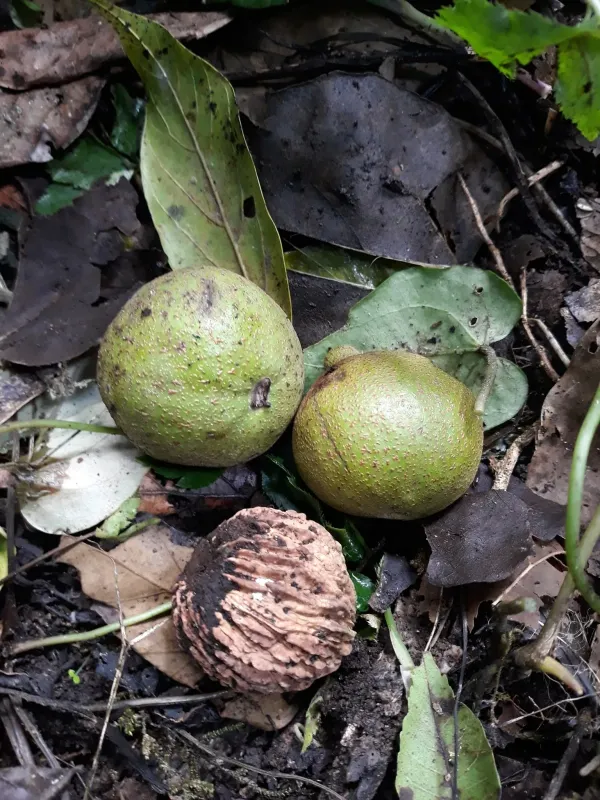
Description
Growing requirements
The Olanchana walnut (Juglans olanchana) is a species of tree belonging to the Juglandaceae family. Unlike the more familiar walnut, this species is a representative of the tropical flora of Central America.
This crop grows naturally in the forests of Honduras, Nicaragua, and other countries in the region. It prefers humid tropical forests, where consistently high temperatures and sufficient rainfall prevail throughout the entire growing season.
For successful growth and development, the tree requires deep, fertile, and well-drained soils. In its natural environment, the plant demonstrates a high growth rate and is capable of reaching impressive sizes, forming a dense, spreading canopy.
The climatic requirements of the species exclude the possibility of cultivation in temperate latitudes due to its total intolerance to freezing temperatures. The crop is extremely sensitive to frost, which can lead to the death of young seedlings and significant damage to mature trees.
The agronomic management of the Olanchana walnut includes maintaining an optimal soil moisture regime and protecting young plantations from direct, intense sunlight during the first years of life. Propagation most often occurs by seeds, which require high humidity levels to germinate.
Yield
The economic use of Juglans olanchana is primarily focused on obtaining high-quality timber. The wood is valued for its strength, beautiful texture, and resistance to external factors, making it a sought-after material in furniture manufacturing.
The fruits of the Olanchana walnut also find application, although they are less common in international trade than the fruits of other species of the Juglans genus. The local population uses them for food, noting their characteristic flavor and high nutritional value.
The yield of the crop depends on the age of the tree and the conditions of growth. In commercial plantations, the main focus is on long-term cultivation to obtain veneer and solid wood used in high-end carpentry.
Beyond timber, the walnut plays an important role in ecosystems by serving as a food source for local fauna. The leaves and other parts of the tree may be used in traditional medicine, although these applications require further research and standardization.
The potential of the crop for forestry is linked to its rapid growth in suitable climatic zones. This allows for the use of the Olanchana walnut in reforestation projects and the development of agroforestry systems in tropical regions.