
Jamaican walnut
Juglans jamaicensis
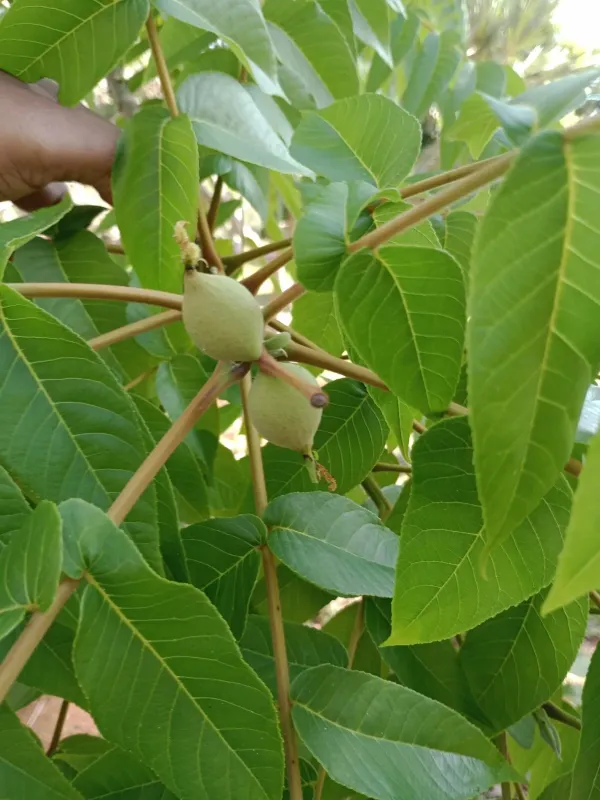
Description
Growing requirements
The Jamaican walnut (Juglans jamaicensis) is a rare tree species belonging to the Juglandaceae family, native to the islands of the Caribbean, including Jamaica, Cuba, and Hispaniola.
This species thrives in tropical moist forest conditions, typically found at higher elevations where temperatures remain stable and the environment is humid throughout the year.
Botanically, it is recognized by its pinnate leaves and the production of small to medium-sized nuts enclosed in a fibrous husk. The tree is highly valued for its durable and aesthetically pleasing timber.
Cultivation requires well-drained, nutrient-rich soil. It is intolerant of frost and requires protection from extreme weather events, making it a niche crop for specialized tropical orchards.
The species serves both ecological and economic purposes, as it provides high-quality timber and local food resources, although its natural populations are increasingly under environmental pressure.
Main diseases and pests
Major threats to Juglans jamaicensis include fungal infections that thrive in the humid tropical environment, specifically those causing leaf spots and bark decay.
Pest pressure from various borers and wood-attacking beetles poses a significant risk to the health of the trees, potentially affecting both the growth rate and structural integrity.
Habitat loss due to deforestation and land development in the Caribbean region remains the most critical threat to the long-term survival of wild populations.
Management of these trees involves regular monitoring for signs of infestation and ensuring the soil composition supports a robust immune response against common pathogens.
Conservation efforts are necessary to protect the genetic integrity of the Jamaican walnut, as its limited geographical range makes it highly susceptible to localized disturbances.