
Chinese walnut
Juglans cathayensis
Description
Growing requirements
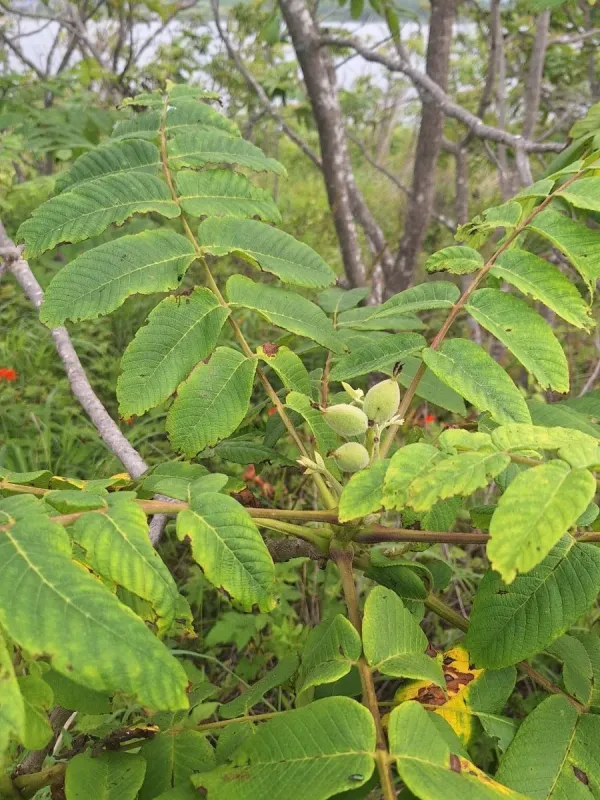
Chinese walnut (Juglans cathayensis) is a deciduous tree belonging to the Juglandaceae family, native to the temperate mountain forests of China. This tree is characterized by its large, odd-pinnate leaves and long, pendulous catkins, which make it a visually striking specimen in any landscape.
The natural habitat of the species includes riparian zones and mountain slopes, where it benefits from high humidity and deep, nutrient-rich soils. It is known for its adaptation to cold climates, making it a potentially hardy choice for specific agro-forestry projects in temperate regions.
Cultivation requirements involve providing the tree with ample space to reach its mature size, which can be over 20 meters. A deep, well-draining soil with good organic matter content is essential for establishing a strong root system that can support the tree's rapid early growth.
Agrotechnical practices should focus on maintaining consistent soil moisture during the first few growing seasons. While the tree can tolerate various soil textures, it thrives best in deep loams and should be protected from strong winds that can damage the brittle wood of young branches.
Maintenance involves periodic mulching around the base to conserve moisture and suppress weeds. Pruning should be kept to a minimum, primarily focusing on removing dead or diseased wood to promote good air circulation through the canopy and minimize fungal risks.
Yield
The fruits of the Chinese walnut are produced in clusters of several nuts, which are covered in a sticky, green husk that turns brown upon ripening. The nuts are smaller than those of the common walnut but are highly valued for their nutritional content and oil quality.
Yield capacity depends heavily on the age of the tree, with significant nut production usually occurring after a decade of growth. Regular pruning of lower limbs can assist in directing the tree's energy toward better fruit development as it matures.
Main diseases and pests
Common health issues for the species include susceptibility to leaf spot diseases when grown in environments with high humidity and stagnant air. Proper spacing during planting is the primary strategy for ensuring that the tree canopy dries out quickly after rainfall.
Pest management should focus on monitoring for common nut tree insects such as borers and leaf-eating caterpillars. Integrated pest management practices, including the support of local beneficial insects, are highly recommended to keep the tree in a healthy, productive state.