
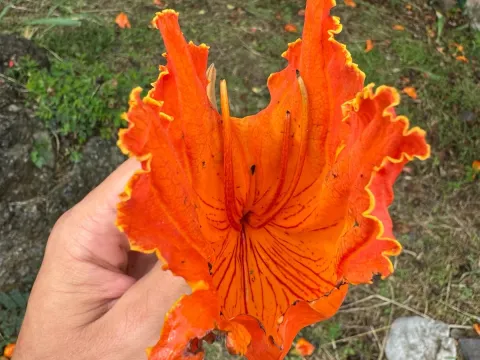
African Tulip Tree
Spathodea
Propagation of the African Tulip Tree is primarily achieved through seeds, which should be sown fresh to ensure the highest germination rate. The seeds are small and require a warm, humid environment to sprout successfully.
What the section contains

African Tulip Tree
For optimal results, seeds are planted in a well-draining seed-starting mix, lightly covered with fine soil or sand. Maintaining a constant temperature of 25 degrees Celsius is crucial for accelerating the germination process.
Seedlings typically emerge within a few weeks and should be kept in bright, indirect light. As they grow, they need to be transplanted into larger pots to prevent root crowding and to support steady vegetative development.
In nursery settings, it is important to avoid over-fertilizing young plants, as their root systems are sensitive to high salt concentrations. A balanced, dilute liquid fertilizer can be applied once the third pair of true leaves appears.
Before moving seedlings to their permanent location, they must undergo an acclimation period to adjust to external weather conditions, especially if they were started in a controlled greenhouse environment.
The African Tulip Tree (Spathodea campanulata) is a fast-growing member of the Bignoniaceae family, native to tropical Africa. It is widely cultivated in tropical regions globally for its stunning orange-red bell-shaped flowers.
This species demands full sun exposure to thrive and produce its signature vibrant blooms. Partial shade may result in a sparse canopy and fewer flowers, reducing the tree's ornamental appeal in landscape design.
The tree is versatile regarding soil types but prefers deep, fertile, and well-drained soil. It is susceptible to root decay if waterlogged, so site selection should prioritize areas with excellent natural drainage.
Climatically, it is strictly tropical and cannot withstand frost. It thrives in high humidity and warm temperatures, making it unsuitable for outdoor cultivation in temperate regions without significant protection.
Routine maintenance includes structural pruning, especially during the tree's youth, to establish a strong central leader and balanced scaffold branches, preventing wind damage in exposed areas.
Common pests include scale insects and aphids, which often cluster on the undersides of leaves or near the developing flower buds. Regular monitoring and physical removal or insecticidal soap application are effective management practices.
Root rot, caused by Phytophthora or Pythium species, remains the most significant threat to plant health in poorly drained landscapes. Ensuring appropriate irrigation practices is the best preventive measure.
The soft wood of the tree makes it somewhat prone to branch breakage during heavy storms. Proper crown thinning helps to reduce wind resistance and minimizes the risk of structural damage to the tree.
Leaf spot diseases, caused by various fungi, can occur during periods of prolonged rainfall or high humidity. Promoting good air circulation throughout the canopy helps to mitigate these fungal infections.
Invasive potential must also be considered in certain tropical regions where the tree can escape cultivation and outcompete native flora. Responsible planting and monitoring are recommended for sustainable management.