
Andean alder
Alnus jorullensis Kunth
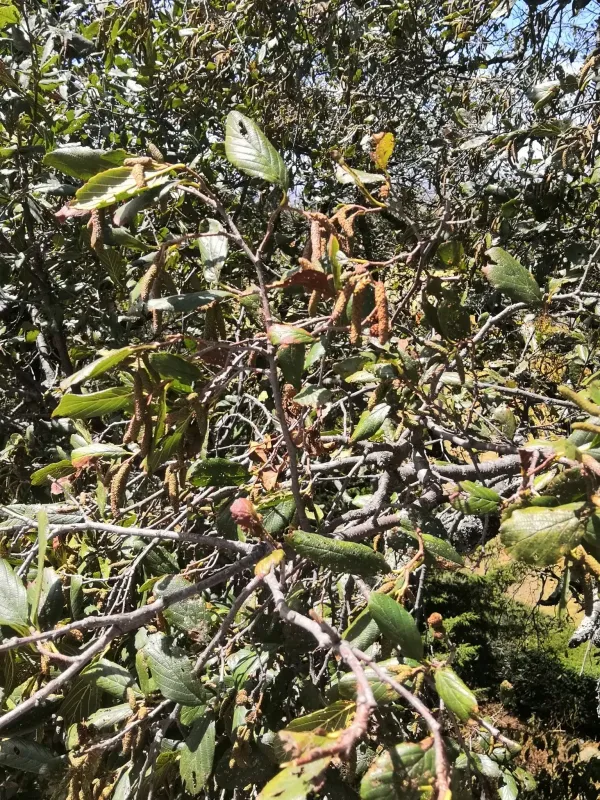
Description
Growing requirements
The Andean alder (Alnus jorullensis) is a fast-growing evergreen or semi-evergreen tree belonging to the Betulaceae family. It is known for its impressive height, which can reach up to 25 meters in favorable conditions.
Native to the mountainous regions of Mexico, Central America, and the Andes, the species is perfectly adapted to cool, high-altitude climates. It typically thrives in regions ranging from 1000 to 3000 meters above sea level.
The tree prefers deep, well-drained, and nutrient-rich soils. While it shows some tolerance for damp ground, excessive waterlogging should be avoided to prevent root diseases and ensure healthy development of the tree.
Andean alder requires full sun exposure for optimal growth but can tolerate partial shade during its initial stages of development. It is sensitive to severe frost, so regional climate selection is critical for successful cultivation.
One of its most significant biological features is its nitrogen-fixing ability. Through a symbiotic relationship with Frankia bacteria in its roots, it transforms atmospheric nitrogen, effectively improving soil quality for other surrounding plant species.
Yield
The primary use of Alnus jorullensis is in reforestation projects and sustainable land management. Its rapid growth rate provides high biomass production, making it a viable species for carbon sequestration initiatives.
The timber obtained from this tree is commercially valuable, being used in furniture manufacturing, cabinetry, and small woodworks. Furthermore, its wood is appreciated for its quality as a reliable fuel source.
In agroforestry systems, the Andean alder serves as an excellent shade tree for coffee plantations. It creates a favorable microclimate that protects delicate crops from intense solar radiation while enriching the soil naturally.
This species is highly regarded for its soil conservation properties. Its extensive root system helps prevent soil erosion on steep hillsides and riverbanks, significantly reducing the risk of landslides in rainy seasons.
For ornamental purposes, it is widely used in landscape design and park development. Its aesthetic structure and ability to thrive in various conditions make it a preferred choice for greening high-altitude urban areas.
Main diseases and pests
Root rot caused by pathogenic fungi remains one of the most serious threats to the Andean alder. This is particularly prevalent in poorly drained soils where moisture accumulates, creating an environment suitable for pathogen proliferation.
Leaf-feeding insects and caterpillars can cause significant defoliation, especially in young saplings in nursery conditions. Early detection and targeted management are essential to prevent widespread damage to the plantation.
Rust diseases are common in humid environments, which can negatively affect the tree's health and aesthetic value. Sanitation methods, such as pruning infected branches, are recommended to control the spread of fungal spores.
Improper irrigation and lack of soil aeration are key factors that compromise the tree's immune system. Stressed plants are significantly more susceptible to secondary infections, which may eventually lead to branch dieback.
An integrated pest management (IPM) approach is recommended for commercial growers. This includes maintaining proper tree spacing for air circulation and using biological controls to manage insect populations effectively.