
Green alder
Alnus viridis (Chaix) DC.
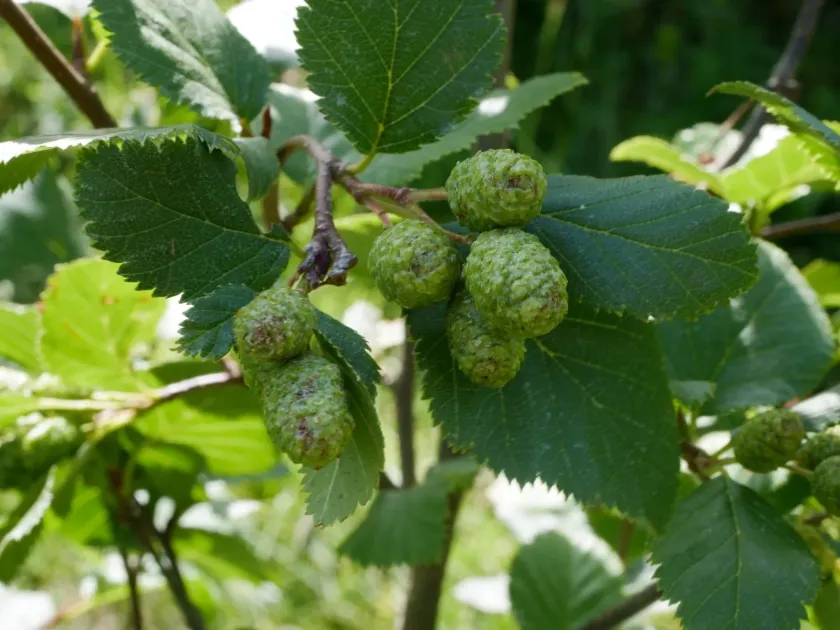
Description
Growing requirements
Green alder (Alnus viridis) is a deciduous shrub belonging to the Betulaceae family. Unlike common alder species that grow into large trees, this plant maintains a shrubby form, making it highly valuable for ecological restoration and slope stabilization.
The species is native to subalpine regions and cool northern climates, displaying exceptional hardiness. It thrives in soils that are often too nutrient-poor for other species, utilizing a symbiotic relationship with nitrogen-fixing bacteria in its root nodules to fertilize the earth.
In terms of soil preferences, green alder is versatile. It grows well on acidic, stony, and mineral soils, provided there is adequate moisture. It does not tolerate prolonged waterlogging or excessive drought, preferring well-drained but humid substrates.
Environmental requirements focus on sufficient light exposure. While it can survive partial shade, full sunlight is essential for optimal biomass production and the maintenance of a dense, healthy shrub structure.
Agronomic management is relatively low-input. Because it acts as a pioneer species, it is often used to prepare degraded sites for secondary succession, requiring little fertilization or irrigation once established.
Main diseases and pests
While generally robust, green alder can be affected by specific fungal pathogens, particularly in humid climates. Leaf rusts and cankers are the most common issues that require monitoring in nurseries.
Pests, such as the alder beetle and various sawfly larvae, can cause defoliation during the growing season, which may weaken young or newly transplanted shrubs.
Prevention involves ensuring adequate spacing between plants to allow for air circulation, which reduces the incidence of fungal growth on leaves and stems.
Integrated pest management, including the encouragement of natural predators like ladybirds and parasitic wasps, is the most sustainable method for controlling potential infestations.
In high-density stands, periodic thinning may be necessary to remove weakened wood and prevent the buildup of pathogens, ensuring the long-term health of the plantation.