
Grey alder
Alnus incana (L.) Moench
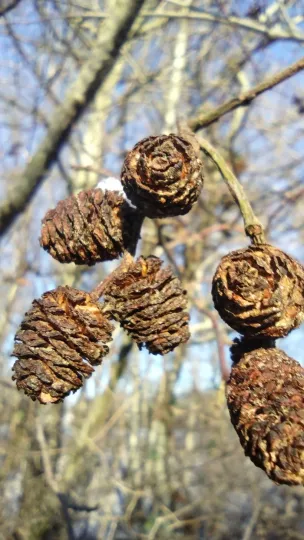
Description
Growing requirements
Grey alder (Alnus incana) is a fast-growing deciduous tree species belonging to the Betulaceae family. It is widely recognized for its ability to colonize diverse landscapes and its significant contribution to soil restoration in disturbed or marginal forest sites.
The native range of this species extends across northern and central Europe, as well as parts of Asia and North America. It generally thrives in moist, well-drained soils, often forming extensive stands along riverbanks, mountain slopes, and abandoned agricultural lands.
A distinctive biological characteristic of Alnus incana is its symbiotic relationship with actinomycetes that form root nodules. These microorganisms fix atmospheric nitrogen, significantly enriching the soil and promoting the growth of subsequent vegetation.
The species demonstrates high tolerance to cold climates and is notably hardy in northern latitudes. It prefers temperate conditions with sufficient moisture, showing a remarkable adaptation to various soil types, ranging from acidic sandy soils to fertile alluvial deposits.
In terms of economic value, grey alder wood is a valuable resource for the pulp and paper industry, plywood manufacturing, and the production of specialized charcoal. Its rapid growth cycle makes it an efficient candidate for short-rotation forestry projects.
Main diseases and pests
Like many alder species, Alnus incana is susceptible to specific fungal pathogens that target the trunk and root systems. These infections often result in internal decay, which can significantly reduce the structural integrity and market value of the timber.
Insect pests, such as leaf-eating beetles and weevils, can cause substantial defoliation during the peak summer months. Severe infestations may lead to stunted growth and reduced vigor, especially in younger plantations that are still establishing their root systems.
Foliar diseases, including rusts and leaf spots, often develop under conditions of high humidity or poor site drainage. Managing these threats typically involves maintaining appropriate planting distances to ensure optimal air circulation throughout the tree crown.
Integrated pest management strategies are crucial for large-scale forest health. This includes selecting resistant cultivars, monitoring for early signs of infestation, and implementing silvicultural practices that promote tree resilience against environmental stress.
Sustainable maintenance programs for alder stands involve periodic sanitary thinning. By removing dead or diseased trees, foresters can prevent the spread of localized infections and maintain the overall productivity of the plantation throughout its life cycle.