
Vvedensky tulip
Tulipa vvedenskyi
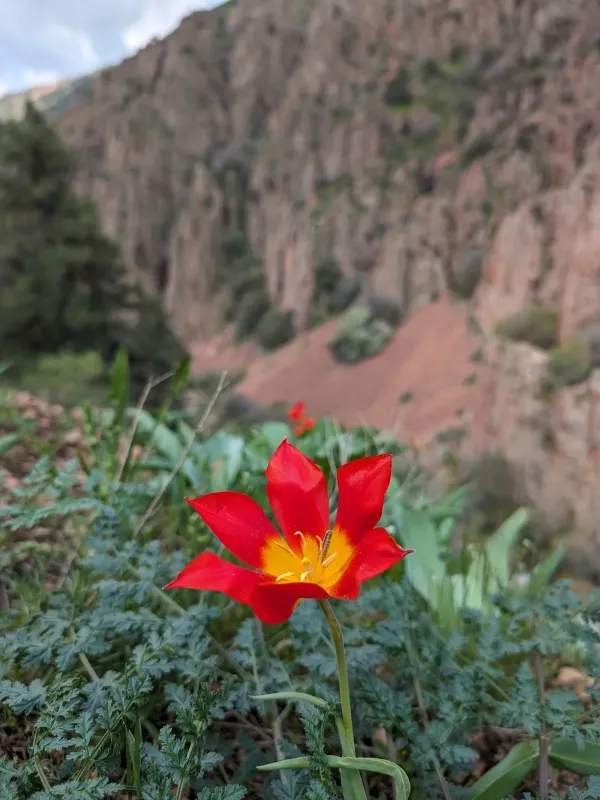
Description
Growing requirements
The Vvedensky tulip (Tulipa vvedenskyi) is a distinct species belonging to the Liliaceae family. It is an ephemeral plant, completing its vegetative cycle rapidly during the favorable spring season when moisture is available.
Native to the stony slopes and foothills of Central Asia, this species requires specific environmental conditions. It thrives best in well-drained, sandy, or loamy soils that maintain a neutral or slightly alkaline chemical balance.
High solar radiation is a fundamental requirement for the Vvedensky tulip. It should be planted in locations that receive direct sunlight throughout the day to ensure proper development of the flower bud and healthy bulb formation.
A crucial aspect of its agronomy is the summer dormancy phase. After the foliage withers, the bulbs must be kept in a dry and warm environment to mimic their native arid habitat, which is essential for ensuring flowering the following season.
Water management must be precise, with irrigation provided only during the active growth and blooming phase. Overwatering during dormancy or late spring will inevitably lead to bulb rot and the loss of the plant.
Main diseases and pests
The most significant threats to this culture are fungal diseases, primarily Fusarium wilt and various forms of bulb rot caused by excessive soil moisture and poor drainage in the root zone.
Insect pests, such as bulb mites and aphids, can cause significant physical damage to both the foliage and the bulbs. These infestations often act as vectors for secondary bacterial or viral infections.
Proactive disease management involves the mandatory treatment of bulbs with broad-spectrum fungicides before planting. Maintaining a strictly clean growing site and removing all plant debris are standard sanitation practices.
Chemical control using systemic insecticides is advised at the first sign of pest activity to prevent population buildup. Any plant exhibiting signs of yellowing, wilting, or rot should be promptly removed and destroyed away from the main planting site.
Ensuring adequate air circulation around the plants and avoiding overcrowding are effective strategies to reduce the prevalence of humidity-related pathogens in the growing area.