
Eichler's tulip
Tulipa undulatifolia
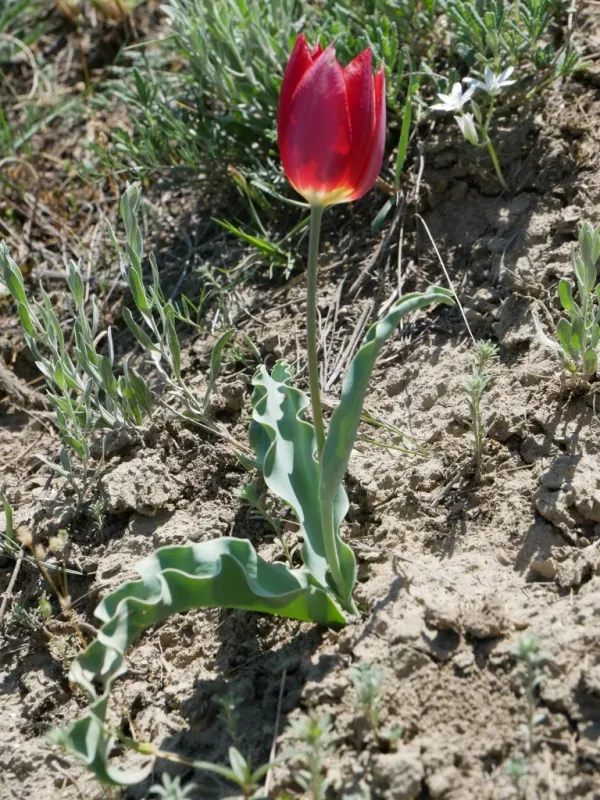
Description
Sowing dates
Planting of Eichler's tulip bulbs is carried out during the autumn season when the soil temperature drops to 9-10 degrees Celsius at a depth of 10-15 cm.
The optimal timing for most regions is between late September and early October, which allows the plant to establish roots before the winter frost sets in.
Bulbs should be planted at a depth of approximately three times their own height to ensure proper insulation and support during the growth phase.
Early planting in warm soil can lead to fungal issues and premature sprouting, which decreases the plant's ability to survive the harsh winter conditions.
Applying a layer of mulch after planting helps maintain stable soil temperature and moisture levels, which are critical for early spring development.
Growing requirements
Eichler's tulip thrives in well-lit locations with full exposure to sunlight, as insufficient light leads to weak, etiolated stems and reduced flowering.
The species prefers light, well-drained loamy soils with a neutral or slightly alkaline pH to ensure healthy bulb development without waterlogging.
Proper drainage is essential, as stagnant moisture is the primary cause of basal rot in tulip bulbs during both the growing and dormant seasons.
During the vegetative growth phase, consistent moisture is required, especially during the bud development stage when the plant is most active.
Balanced mineral fertilizers should be applied during the early growth cycle to support the formation of high-quality flowers and future bulb replenishment.
Main diseases and pests
Grey mold (Botrytis tulipae) is a significant threat, particularly in humid climates where it causes spots on leaves and premature wilting of flowers.
Fusarium rot is a common soil-borne disease that affects the bulbs, leading to decay and poor performance during the subsequent growing seasons.
Bulb mites can cause severe damage by feeding on the base of the bulbs, often creating entry points for secondary bacterial and fungal infections.
Aphids represent a serious challenge not only due to direct feeding but also because they transmit viruses that cause variegated flower patterns.
Effective management involves consistent sanitation, regular monitoring of the planting area, and preventative fungicide treatment of the bulbs.
Harvesting
Harvesting should only occur once the foliage has completely turned yellow and died back, indicating the bulb has stored enough energy for next year.
Careful excavation using manual tools is recommended to prevent mechanical damage to the bulb tissue, which would otherwise invite storage rots.
The harvested bulbs must be cleaned of excess soil and cured in a dry, shaded, and well-ventilated space to prepare them for long-term dormancy.
Storage conditions must remain cool and dry, with proper ventilation to maintain bulb vitality and prevent premature emergence or decay.
Systematic sorting of bulbs during the harvest phase helps identify healthy specimens for replanting and ensures the overall vigor of the plant stock.