
Turkestan tulip
Tulipa turkestanica
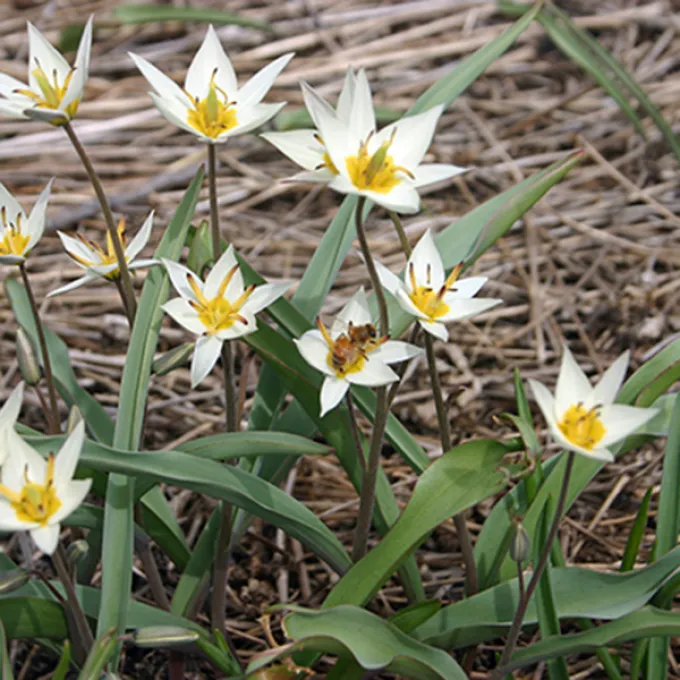
Description
Sowing dates
Planting of the Turkestan tulip bulbs should be carried out in autumn when the soil temperature at a depth of 10-15 centimeters stabilizes around 9–10 degrees Celsius. It is crucial to complete the planting process well before the first hard frosts to ensure successful root establishment.
The optimal planting depth is generally considered to be three times the height of the bulb. In heavy, clay-based soils, the depth may be slightly reduced, while in light, sandy soils, it should be increased to provide adequate thermal insulation for the bulb during winter.
Propagation from seeds is possible but rarely practiced by commercial growers as it is a time-consuming process. Plants grown from seeds usually take between four to six years to reach maturity and produce their first bloom, requiring specific container management.
A spacing of 10-15 centimeters between individual bulbs is recommended. Proper spacing prevents resource competition for nutrients and water, which is vital for maintaining plant vigor and promoting the production of healthy daughter bulbs for future seasons.
After planting, it is advisable to ensure the area is free from deep water pockets. Proper preparation of the planting site ensures that bulbs can survive the dormancy period without being subjected to excess moisture that triggers rotting.
Growing requirements
The Turkestan tulip, a member of the Liliaceae family, is a botanical species native to the mountain ranges of Central Asia. It is highly adapted to rocky, well-draining terrains and requires specific environmental conditions to thrive in a garden setting.
The plant demands excellent soil drainage. It thrives in neutral to slightly alkaline, loose substrates that prevent water stagnation. In gardens with poor drainage, adding coarse sand or gravel to the planting hole is essential for the long-term survival of the bulbs.
Full sun is required for the Turkestan tulip to reach its full potential. Exposure to bright, direct light throughout the day ensures strong stems and the successful accumulation of energy required for the next growth cycle, which occurs during the dormancy stage.
Watering should be managed carefully; it is only necessary during the active spring growing season. Once the foliage begins to fade and turn yellow, irrigation should be halted completely to allow the bulbs to undergo a dry dormancy phase, mimicking their natural environment.
This species is well-adapted to continental climates with cold winters and hot, dry summers. It exhibits high winter hardiness, allowing it to withstand significant temperature drops, which is a key trait of its mountain-dwelling ancestors.
Main diseases and pests
Fungal infections, such as Fusarium rot, are the primary threat to the Turkestan tulip, especially in conditions of high humidity or poor soil aeration. These pathogens target the bulb directly, causing them to soften and decay rapidly if left unchecked.
Pests such as bulb mites and nematodes cause significant damage by feeding on the bulb tissues. Infested plants typically show stunted growth, yellowing leaves, and distorted flowers, eventually leading to a complete decline of the plant population.
Aphids can also pose a secondary threat by acting as vectors for viral diseases, including tulip breaking virus. Once a plant is infected with a virus, there is no effective treatment, and the infected specimen must be removed and destroyed to prevent spreading.
To mitigate these risks, pre-planting treatment of bulbs with appropriate fungicides is standard practice. Maintaining good garden hygiene, including the removal of dead plant material at the end of the season, helps keep pathogen levels low.
- Always inspect bulbs for signs of damage or decay before planting.
- Use well-draining soil mixes to minimize fungal development.
- Practice crop rotation if replanting in the same location is necessary.
- Keep tools disinfected to prevent mechanical transmission of diseases.