
Late tulip
Tulipa tarda
Description
Growing requirements
The late tulip (Tulipa tarda) is a member of the Liliaceae family, native to the mountainous regions of Central Asia. This species is highly adapted to harsh alpine conditions, rocky substrates, and significant daily temperature fluctuations.
As a botanical tulip, Tulipa tarda performs best in full sun. While it is tolerant of various conditions, it requires well-drained soil to thrive. Heavy, waterlogged soils are detrimental to its bulbs, often leading to rot if drainage is not managed correctly.
Soil requirements focus on neutrality and permeability. It is an excellent candidate for rock gardens, where the rocky composition of the soil mimics its natural habitat. The plant is drought-tolerant once established, making it a low-maintenance choice for many gardens.
Climatically, this species is extremely hardy and requires a distinct period of winter dormancy to initiate spring growth. It is a true ephemeral, blooming early in the season and going dormant as summer temperatures rise and moisture levels drop.
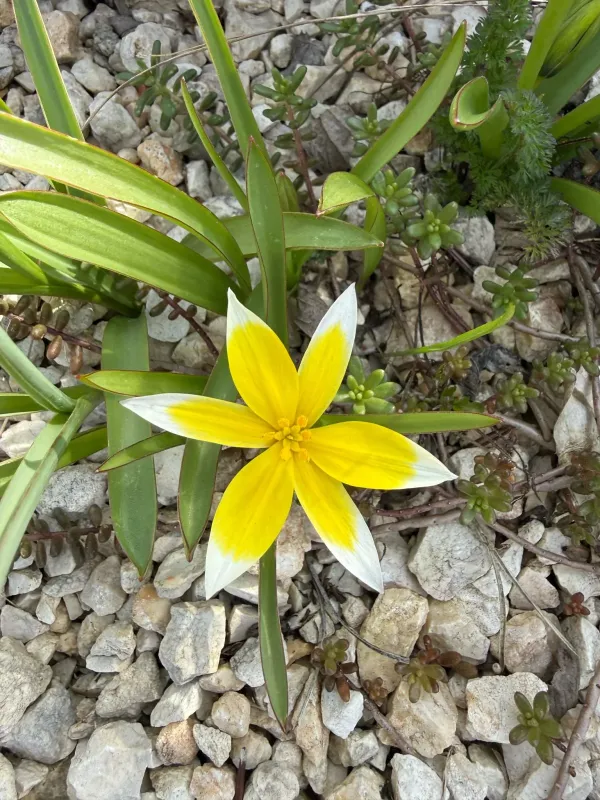
Botanically, it is distinctive for its star-shaped flowers that open wide in the sun. Each stem can produce multiple blooms, displaying a bright yellow center fading to white tips, which makes it highly desirable for naturalizing in sunny meadows or borders.
Main diseases and pests
The primary threats to Tulipa tarda involve soil-borne pathogens like Botrytis (gray mold) and Fusarium, which typically infect plants in gardens with poor aeration or excessive humidity.
Bulb mites and onion nematodes are common pests that attack the basal plate of the bulb, causing the plant to fail to bloom or eventually wither. These pests are often introduced through infested bulbs or contaminated soil.
Rodents, such as mice and voles, are significant threats to all tulip bulbs. Planting in wire baskets or using physical barriers is a standard and effective practice to protect the plants during the dormant phase.
Viral infections, specifically tulip breaking virus, can manifest as irregular color streaks. Since these viruses are incurable, affected plants must be removed and destroyed to prevent spread by aphids or mechanical transmission.
- Use only high-quality, disease-free planting material.
- Ensure a minimum of 10-15 cm of soil drainage depth.
- Remove any decaying plant matter from the flower beds annually.