
Tulip of Bieberstein
Tulipa sylvestris
Description
Growing requirements
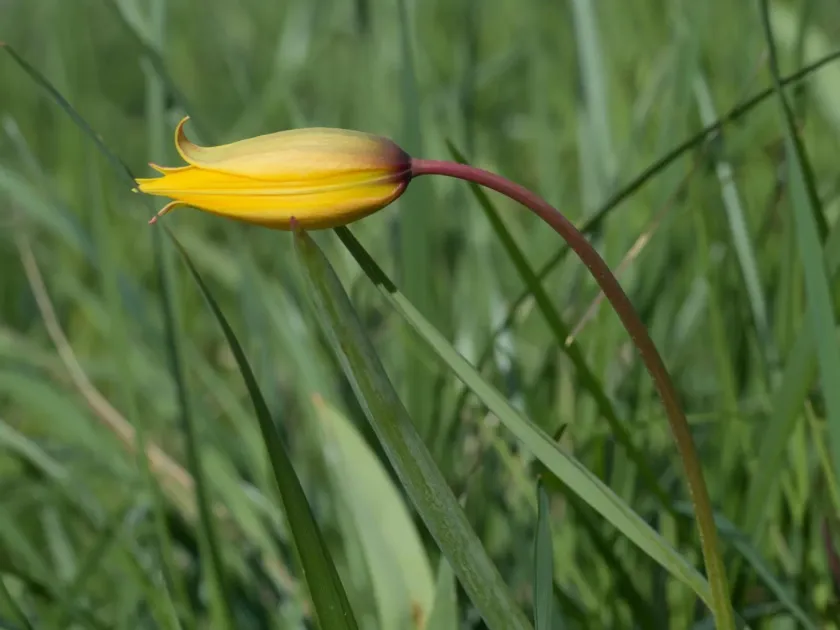
The Tulip of Bieberstein (Tulipa sylvestris subsp. biebersteiniana) belongs to the Liliaceae family. It is a perennial bulbous plant characterized by its ability to reproduce vegetatively via stolons, which allows it to form small, dense colonies in its natural habitat.
In the wild, the plant grows in steppe zones, on rocky slopes, and in sparse woodlands. Its range covers vast areas of Eurasia, where the species has adapted to the fluctuating temperatures and moisture levels typical of a continental climate.
Successful cultivation requires well-drained, fertile soil with a neutral to slightly alkaline pH. The culture is highly sensitive to moisture retention, which promotes bulb rot, so elevated or sloped garden areas are considered the most appropriate planting sites.
The plant exhibits high frost resistance, which is typical for steppe species. The Tulip of Bieberstein prefers sunny locations but can tolerate short periods of partial shade, as its biological cycle is completed before the onset of extreme summer heat.
Its primary use is in decorative gardening, specifically for rock gardens and naturalistic landscapes. Due to the conservation status of many wild populations, large-scale commercial production remains extremely limited.
Main diseases and pests
The most significant threats include fungal infections, such as gray mold (Botrytis) and fusarium, which attack the root system in poorly drained soils.
The plant is susceptible to bulb mites and various aphid species, which weaken the bulb and can serve as vectors for systemic viral diseases.
Rodents represent a major threat to field plantings, as they frequently consume the bulbs during the plant's dormant phase.
Tulip breaking virus is a specific concern, requiring the prompt removal and destruction of infected individuals to prevent the spread to healthy plants.
Effective management strategies include crop rotation and the application of fungicides to bulbs prior to planting to ensure a healthy establishment.