
Ostrowsky tulip
Tulipa ostrowskiana
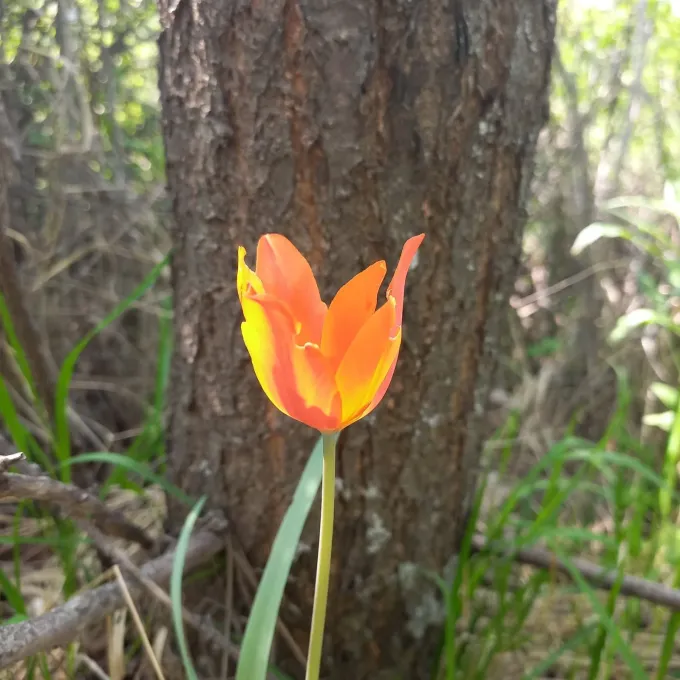
Description
Growing requirements
The Ostrowsky tulip (Tulipa ostrowskiana) is a perennial bulbous plant belonging to the Lily family (Liliaceae). Native to the mountainous regions of Central Asia, it is typically found in rocky habitats and slopes, showcasing high adaptability to dry environments.
To cultivate this species, provide well-drained, porous soil. Incorporating coarse sand or fine gravel into the planting site is essential to prevent moisture accumulation, which can cause bulb rot during the summer dormant phase.
This species thrives in full sun exposure. Adequate light is crucial for the development of the flower stem and the vibrant coloration of the petals, which are characteristic of this species in its natural mountainous environment.
The plant is naturally drought-tolerant. In a garden setting, it requires minimal irrigation, especially after the flowering period, allowing the soil to remain relatively dry to ensure proper maturation of the bulbs.
The growth cycle follows a seasonal pattern: active spring growth followed by a necessary period of dormancy in summer heat. It is vital to avoid planting in heavy soils that retain water and remain damp throughout the year.
Main diseases and pests
Fungal diseases are the primary threat, often caused by poor drainage and excessive soil humidity. Grey mold (Botrytis) frequently attacks the leaves and stems during cool, wet springs, leading to stunted growth.
Fusarium wilt is a serious concern for bulbous plants, causing the roots and basal plate to decay. Once infected, plants typically fail to emerge or wither prematurely, necessitating the removal of the entire bulb and surrounding soil.
Pests such as bulb mites are particularly damaging, as they enter the bulb and feed on its tissues. This infestation not only weakens the plant but also facilitates the ingress of secondary pathogens like bacteria and fungi.
Aphids can cause significant damage by feeding on young leaves and developing flower buds. Beyond direct damage, aphids act as vectors for various plant viruses that cause streaking and deformity in flowers.
Integrated pest management, including regular inspection and the use of appropriate fungicides and insecticides, is recommended. Always ensure that bulbs are stored in a dry, well-ventilated place if they are to be lifted after the foliage dies back.