
Orphanide's Tulip
Tulipa orphanidea
Description
Growing requirements
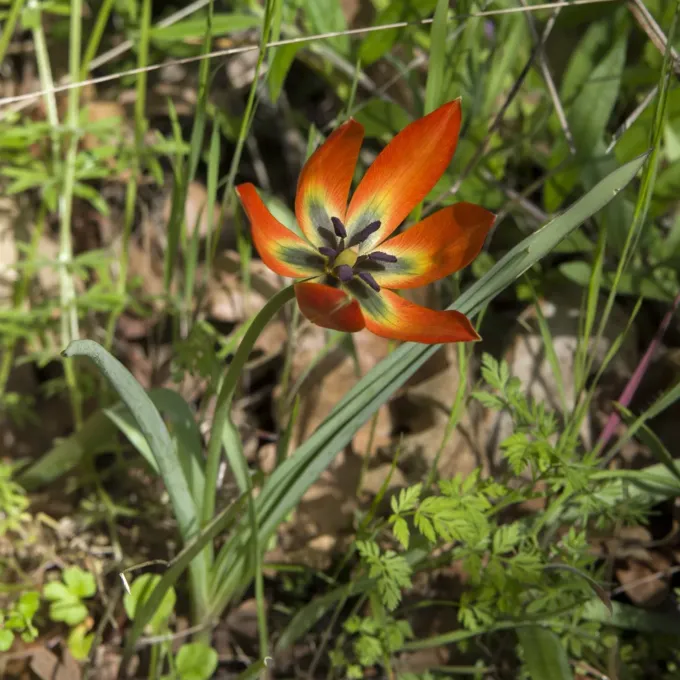
Orphanide's Tulip (Tulipa orphanidea) is a bulbous perennial belonging to the Liliaceae family, native to the rocky habitats of Greece and Turkey. It is characterized by its compact habit and vibrant flower colors, often showing shades of bronze or orange.
The cultural success of this species depends primarily on soil drainage. It requires a substrate that is loose and well-aerated to prevent moisture accumulation around the bulb, which is crucial for preventing physiological disorders in the roots.
Optimal growth conditions involve full sun exposure, mimicking its natural mountainous environment. It thrives in well-drained, gritty soils, making it an ideal choice for rock gardens and Mediterranean-style landscapes where soil warmth is guaranteed.
The plant requires a period of distinct seasonal change, with warm and dry summers during its dormancy. Maintaining this dry regime after flowering is essential for the maturation of the bulb and successful blooming in the following cycle.
Care practices include minimal intervention. Fertilization should be kept to a low level, focusing on phosphorus to support floral development, as excessive nitrogen can lead to poor bulb formation and increased susceptibility to various pathogens.
Main diseases and pests
Fungal diseases are the primary threat, especially when cultivation occurs in soils with poor drainage. Rot caused by Fusarium or Rhizoctonia species can devastate plantings, leading to the rapid decline of the bulb population.
Bulb mites and various soil-dwelling larvae are common pests that feed on the root systems. Using high-quality, treated bulbs and maintaining strict site sanitation are critical steps for any professional or amateur gardener.
Rodents such as voles and mice often consider these bulbs a source of food. Protective physical barriers are recommended when planting in open areas to avoid significant losses in plant density and overall yield of the floral display.
Viral pathogens pose a significant risk, causing symptoms like color breaking or distorted leaves. Since there is no cure for viral infections in bulbs, strict rogueing of affected plants is the only way to manage the disease.
Regular inspection of the site during the growing season allows for early intervention. Improving aeration and ensuring adequate light levels for the foliage will help strengthen the plants' natural resistance to common botanical stressors.