
Kolpakowsky tulip
Tulipa kolpakowskiana
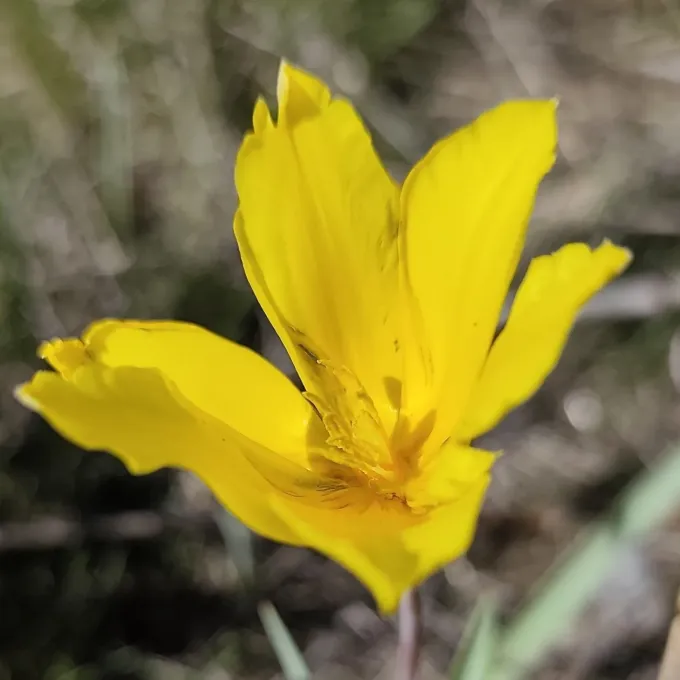
Description
Sowing dates
As an ephemeral species, the Kolpakowsky tulip requires planting in the open ground during the autumn season, typically September or October.
It is essential to plant the bulbs before the soil freezes to ensure successful root establishment before the winter dormancy period begins.
The planting depth should be approximately three times the diameter of the bulb, providing optimal insulation against harsh winter temperatures.
For seed propagation, sowing is carried out in containers before winter, as young seedlings require a controlled environment to develop properly.
Avoid relocating these bulbs once established, as the root system is highly sensitive to disturbance and damage during the growing process.
Growing requirements
The Kolpakowsky tulip belongs to the Liliaceae family and is native to the foothills of the Northern Tian Shan mountains.
Successful cultivation requires well-drained, nutrient-rich soil that mimics the rocky, arid conditions of its natural habitat in Central Asia.
Full sunlight is a critical requirement for this species, as even partial shade can lead to leggy stems and poor flower production.
The plant demonstrates high drought tolerance during its summer dormancy, but it requires moisture during the spring growth phase.
Ensure that the soil pH is neutral or slightly alkaline, and incorporate coarse sand to improve drainage and prevent moisture stagnation.
Main diseases and pests
Fungal diseases, particularly gray mold and root rot, are the most common threats that occur if the soil remains overly damp during the growing season.
Soil-dwelling pests, including bulb mites and certain larvae, can destroy the bulbs, necessitating regular inspection of the planting site.
Aphids can cause damage to foliage during the spring, which may hinder photosynthesis and decrease the plant's overall vigor.
Implementing a strict regime of rotating planting sites and using high-quality, disease-free bulbs can significantly reduce the risk of infection.
It is recommended to apply preventive fungicide treatments on bulbs prior to planting to safeguard against soil-borne pathogens.
Harvesting
Seed harvest should take place after the seed pods have naturally dried and split open, usually occurring in mid-summer.
Bulbs meant for storage or replanting should only be harvested once the foliage has completely withered and turned brown.
After excavation, the bulbs must be cleaned of dirt and cured in a cool, dry, and well-ventilated area to prevent decay during storage.
Storing bulbs in breathable containers allows for necessary air circulation, helping to maintain their viability until the next planting season.
Proper harvesting practices ensure that the bulbs have successfully entered their dormant state, preparing them for the next cycle of growth.