
Huge tulip
Tulipa ingens
Description
Growing requirements
Tulipa ingens, commonly known as the huge tulip, is a perennial herbaceous bulbous plant belonging to the Liliaceae family. It originates from the high-altitude regions of Central Asia, specifically the Pamir-Alay mountain systems.
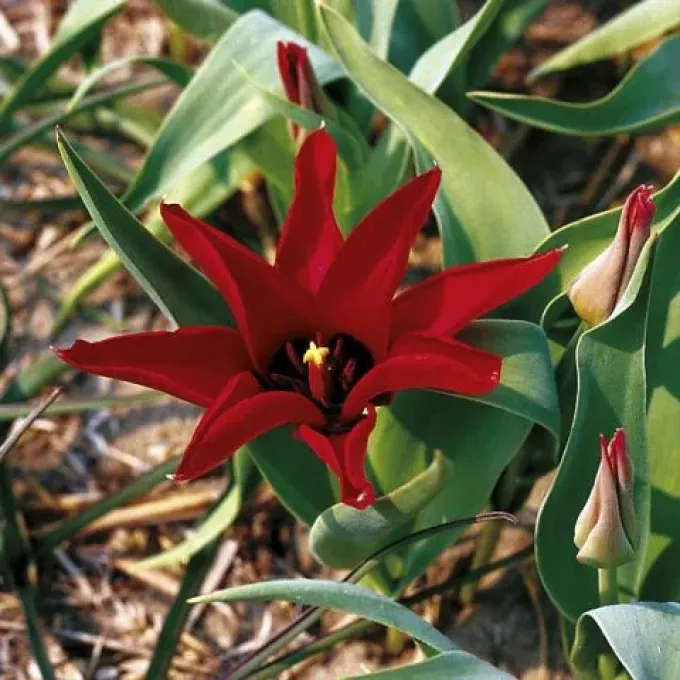
The botanical profile of the plant includes a sturdy stem and large, vivid scarlet flowers often featuring a dark basal blotch. The foliage is characterized by a glaucous, bluish-green hue and a fleshy, broad structure.
To cultivate this species, one must provide a location with full solar exposure and excellent drainage. The species thrives in light, gritty soils, which prevent water accumulation and ensure the health of the bulbs during dormant cycles.
Agricultural management requires careful attention to the summer dormancy phase. It is often necessary to lift the bulbs after the foliage fades to store them in a dry, well-ventilated environment until autumn planting.
The plant serves primarily in decorative horticulture and germplasm conservation. Its striking appearance makes it a prized subject for botanical gardens and specialized collectors interested in endemic species of tulips.
Main diseases and pests
Pathogenic fungi, such as Botrytis tulipae and various Fusarium strains, represent the primary threats to the health of the bulbs. Preventive measures include soil aeration and the use of fungicide-treated bulbs before sowing.
In terms of insect pests, aphids and bulb mites are frequent visitors that can impact plant vigor. Implementing an integrated pest management strategy is essential to maintain the long-term survival of the crop in garden conditions.