
Hungarian tulip
Tulipa hungarica
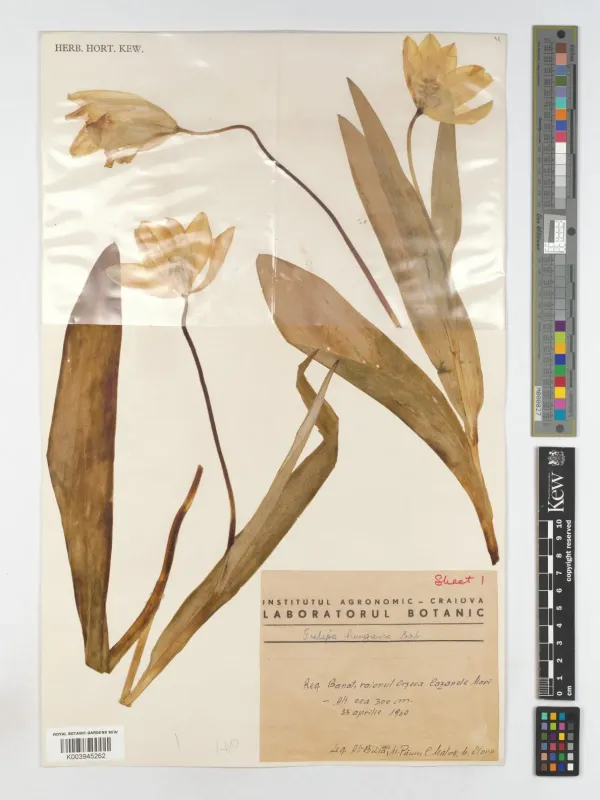
Description
Growing requirements
The Hungarian tulip (Tulipa hungarica) is a perennial bulbous plant belonging to the Liliaceae family. It is native to the limestone cliffs and rocky regions of Southeastern Europe, specifically within the Balkan peninsula, where it thrives in extreme environmental conditions.
This species is highly adapted to high-light environments and requires full sun exposure to initiate the flowering process. It does not tolerate shade, which can significantly inhibit the development of the bulb and reduce the chances of successful yearly reproduction.
Regarding soil requirements, this plant demands excellent drainage. The ideal substrate is a light, porous soil mix with an alkaline to neutral pH. Heavy soils that retain excess moisture can cause immediate bulb rot, rendering the plant unable to survive its dormancy period.
Agricultural management for this species is minimal compared to commercial tulip hybrids. The focus is placed on simulating natural cycles: active growth during the cool spring months followed by a distinct dry summer phase, which is essential for bulb maturation.
Due to its slow propagation rate, this plant is primarily valued as a botanical rarity in rock gardens or specialized collections, requiring careful selection of planting sites that mimic its native rocky habitat.
Main diseases and pests
The primary threats to Tulipa hungarica include soil-borne pathogens such as Fusarium oxysporum and Rhizoctonia species. These fungi thrive in wet, compacted soils and are the leading cause of bulb decay in cultivation.
Pests such as bulb mites (Rhizoglyphus) are particularly damaging, as they bore into the basal plate of the bulb, weakening the plant's overall health and making it susceptible to secondary infections.
Aphids are another major concern, not only for the direct damage they cause by sap-sucking but primarily because they serve as primary vectors for viruses that lead to permanent plant deformation and eventual death.
Effective management strategies include the use of preventive fungicides during the storage of bulbs and maintaining high sanitation standards in the garden to prevent the spread of soil-borne diseases.
Cultural control, such as ensuring proper spacing between bulbs and practicing regular crop rotation, is essential for maintaining a healthy population and preventing the build-up of specific host-targeted pathogens over time.