
Greig's tulip
Tulipa greigii
Description
Sowing dates
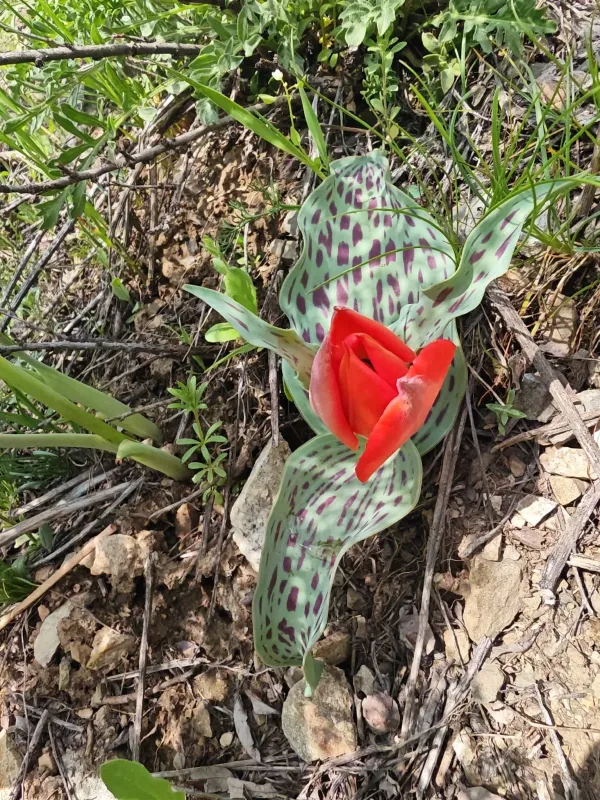
Greig's tulip (Tulipa greigii) is a bulbous perennial belonging to the Liliaceae family. In agricultural and horticultural practices, bulbs are planted in the autumn, usually between September and October, to allow sufficient root development before the ground freezes.
The timing is crucial; the soil temperature should ideally range between 9 °C and 10 °C. Planting too early can encourage premature sprouting, while late planting leads to weak root systems and poor flower quality in the spring.
The planting depth is typically set at three times the height of the bulb. In heavy clay soils, providing a layer of coarse sand at the bottom of the planting hole is highly recommended to improve drainage and prevent bulb rot.
Proper spacing is vital for the health of the crop. Bulbs should be planted 10 to 15 cm apart to ensure adequate airflow and nutrient uptake, which significantly reduces the spread of fungal pathogens during the growing season.
Once planted, covering the area with a thin layer of organic mulch helps stabilize soil temperature and retains moisture, creating an ideal environment for early spring growth and root establishment.
Growing requirements
Originating from the mountainous regions of Central Asia, this species thrives in well-lit, sunny areas. It is highly adapted to sites with excellent exposure to sunlight, which is necessary for vibrant foliage and bloom development.
The soil must be light, fertile, and well-drained. Tulipa greigii does not tolerate waterlogging, which often leads to the destruction of the bulb's basal plate and subsequent fungal infections.
Consistent but moderate watering is required during the active growth and flowering phases. As soon as the petals begin to wither, watering should be gradually reduced to initiate the dormant period.
Nutrient management is key for multi-year success. Balanced mineral fertilizers applied in early spring and shortly after flowering provide the energy needed for the bulb to store carbohydrates for the following year.
Crop rotation is an essential agronomic practice. To prevent the accumulation of soil-borne diseases such as tulip fire, it is advised to avoid planting tulips in the same spot for more than three consecutive years.
Main diseases and pests
Gray mold (Botrytis tulipae) is the most common fungal threat, particularly in cool, damp climates. It causes spots on foliage and can lead to flower stem collapse if not managed promptly.
Viral infections, such as the tulip breaking virus, are critical threats. Since there is no cure, infected plants must be rogueed immediately and destroyed to protect the surrounding crop from aphid-transmitted spread.
Bulb mites can infest storage stocks and weaken the plant from the roots up. Maintaining clean storage facilities and disinfecting bulbs before planting are standard practices to minimize these pest populations.
Rodents, including mice and voles, are notorious for feeding on tulip bulbs during winter. Protective measures, such as wire cages or buried plastic containers, are often required in areas with high rodent pressure.
- Perform regular visual inspections for early signs of disease.
- Ensure good ventilation in both the garden and storage areas.
- Use fungicide dips on bulbs if soil conditions are historically prone to rot.
Harvesting
Harvesting bulbs should only take place once the foliage has turned yellow and withered, typically in late June or early July. This process allows the bulb to complete its cycle and store enough energy for the next season.
Bulbs must be lifted carefully using a pitchfork or spade to avoid mechanical damage. Once harvested, they should be cleaned of soil and debris, then spread out in a shaded, ventilated area to dry for 1–2 weeks.
After the initial drying phase, sort the bulbs by size and health status. Any bulbs showing lesions or signs of pest damage should be discarded to prevent contamination of healthy stock during storage.
Storage conditions dictate the quality of the next season's bloom. Keep bulbs in a dry, well-ventilated location starting at 20–22 °C, slowly cooling them to 15 °C as autumn approaches to simulate natural cooling cycles.
Proper harvest and post-harvest handling are essential to ensure the longevity of the cultivar. Failure to provide a proper dry summer rest period often leads to "blind" bulbs that produce leaves but no flowers.