
Garden tulip
Tulipa garden
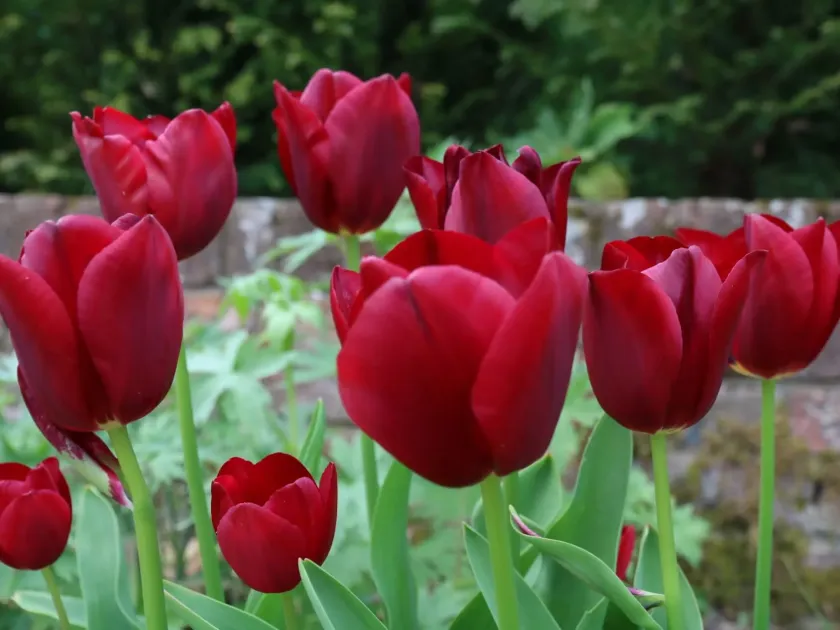
Description
Sowing dates
Planting garden tulips in open ground is traditionally carried out in autumn when soil temperatures at a depth of 10-12 cm drop to +9...+10°C. Depending on the climate zone, this usually falls between late September and early October.
Optimal planting dates are crucial: bulbs must root before the first hard frosts but should not initiate active vegetative growth. Early planting often leads to premature sprout development, making them vulnerable to frost damage.
Spring planting is possible if bulbs have undergone a mandatory chilling period in a refrigerator. However, spring-planted tulips generally bloom later and often possess less developed root systems compared to those planted in autumn.
Always select healthy, calibrated bulb material free from mechanical damage or rot. Before planting, it is recommended to treat the bulbs with a fungicide solution to prevent soil-borne infections.
Planting depth should be approximately three times the height of the bulb, which corresponds to 10-12 cm in heavy soils and up to 15 cm in light sandy soils. Adherence to these depth standards ensures proper flower stalk formation and prevents winter freeze-thaw damage.
Growing requirements
The garden tulip belongs to the Liliaceae family and is a perennial herbaceous bulbous plant. This crop has high light requirements and prefers open, sunny locations protected from strong, drying winds.
Optimal growth is achieved in loose, fertile loamy soils with a neutral or slightly alkaline pH. Soils with waterlogging are unsuitable, as they lead to basal rot and fungal diseases.
Adequate soil aeration is essential for the root system. Organic fertilizers, such as well-decomposed compost or manure, should be applied a year before planting to prevent direct contact between bulbs and fresh organic matter.
During the active growing season, regular fertilization is required: nitrogen at the start of growth, and phosphorus-potassium fertilizers during the budding phase and the replacement bulb formation period.
The optimal temperature range for bud formation is +15...+20°C, though bulbs are highly tolerant of cold during the rooting phase. After flowering, tulips require a dormancy period in relatively dry soil at higher temperatures.
Yield
Tulip yield is determined by the multiplication coefficient, which depends on variety characteristics and agricultural management. High-performance varieties can produce 2-4 daughter bulbs per season under ideal conditions.
Commercial tulip production focuses on both cut flower sales and bulb distribution. For cut flowers, strict temperature control in greenhouses or moisture management in fields is essential to ensure high quality.
The weight of the replacement bulb directly affects the size and quality of the flower in the following year. Intensive cultivation techniques often involve removing flower stalks immediately after the bud opens to maximize energy for bulb development.
An important factor in maintaining yield is the annual excavation of bulbs after the foliage has withered. Leaving bulbs in the ground for several years results in smaller bulbs, deeper growth, and a loss of decorative quality.
After harvesting, bulbs are sorted by size, cleaned, and stored in dry, well-ventilated rooms with a gradual reduction in temperature. Precise adherence to storage temperature phases is critical for successful flower organ development.
Main diseases and pests
The most dangerous threat is the tulip breaking virus, which manifests as streaks or stripes on the petals. There is no cure for this virus, so infected plants must be immediately destroyed along with the bulb to prevent spreading.
Fungal infections such as Fusarium wilt, grey mold, and typhula rot attack roots and bulbs in damp soil conditions. Prevention includes treating planting material and practicing crop rotation, avoiding the same site for at least 3-4 years.
Bulb mites are a significant pest, feeding on the bulb base and creating entry points for secondary infections. In cases of high infestation, systemic acaricides should be applied.
Nematodes also pose a serious threat, causing deformation of leaves and stems. Management is difficult, so prevention through rigorous selection of healthy planting material remains the primary control method.
Small rodents such as mice and voles can destroy plantings during winter. The use of specialized planting baskets or repellent products placed in the planting holes can provide effective protection.
Harvesting
Cut flowers intended for sale are harvested at the colored bud stage while the bud is still tightly closed. This ensures maximum durability during transport and a longer vase life.
Bulb harvesting is performed when the foliage has yellowed by about two-thirds but has not yet completely dried. Waiting until the foliage is entirely dead can cause bulbs to break apart, making them difficult to locate in the soil.
Garden forks are the preferred tool for harvesting to minimize mechanical damage to the bulbs. Injured material is prone to rot and acts as an entry point for various pathogens.
Following harvest, bulbs must be dried in a well-ventilated, shaded area. This curing process lasts 2-3 weeks and is necessary for tissue maturation and the formation of protective outer scales.
The final stage involves removing old roots and residual soil. Subsequent storage requires strict temperature control: the first months at +20...+25°C, with a gradual reduction to +12...+15°C before the next planting season.