
Cretan tulip
Tulipa cretica
Description
Growing requirements
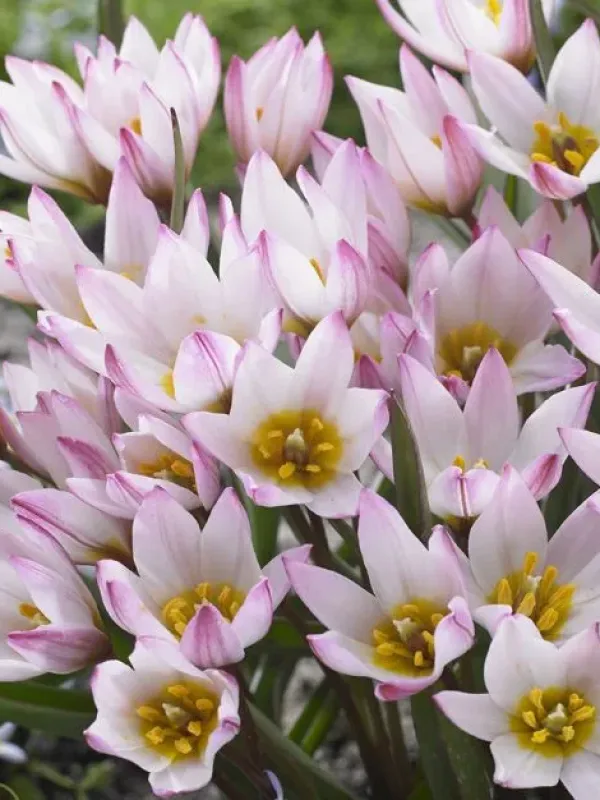
The Cretan tulip (Tulipa cretica) belongs to the Liliaceae family. It is a low-growing perennial bulbous plant endemic to the island of Crete in Greece.
In its natural habitat, the plant prefers open rocky areas, mountain slopes, and limestone screes. It is well-adapted to a Mediterranean climate characterized by hot, dry summers and mild, damp winters.
For successful cultivation, excellent drainage must be provided, as water stagnation around the bulb is detrimental. The soil should be light, sandy-loamy, with a neutral to slightly alkaline pH.
The ideal planting location is a sunny, well-lit area sheltered from strong winds. In regions with severe winters, this species requires mandatory protection or cultivation in a protected environment such as a greenhouse.
Agricultural practice requires mimicking the natural dormant period during summer, when the plant needs dry and warm soil to ensure the full maturation of the replacement bulb.
Main diseases and pests
The primary threats to the bulbs are fungal diseases that develop when humidity levels are improperly managed. Common issues include basal rot and Fusarium wilt, caused by pathogenic soil-borne fungi.
Among pests, the onion nematode and the bulb mite are the most destructive, as they damage the basal plate and scales, thereby weakening the plant's overall vitality.
To prevent these issues, it is necessary to disinfect planting material with fungicidal treatments before placing the bulbs into the soil.
It is also essential to monitor and control rodent populations, which may feed on the bulbs during the winter dormancy period.
Crop rotation and strict avoidance of waterlogging are key management practices for protecting this rare tulip species from harmful organisms.