
Bieberstein's tulip
Tulipa biebersteiniana
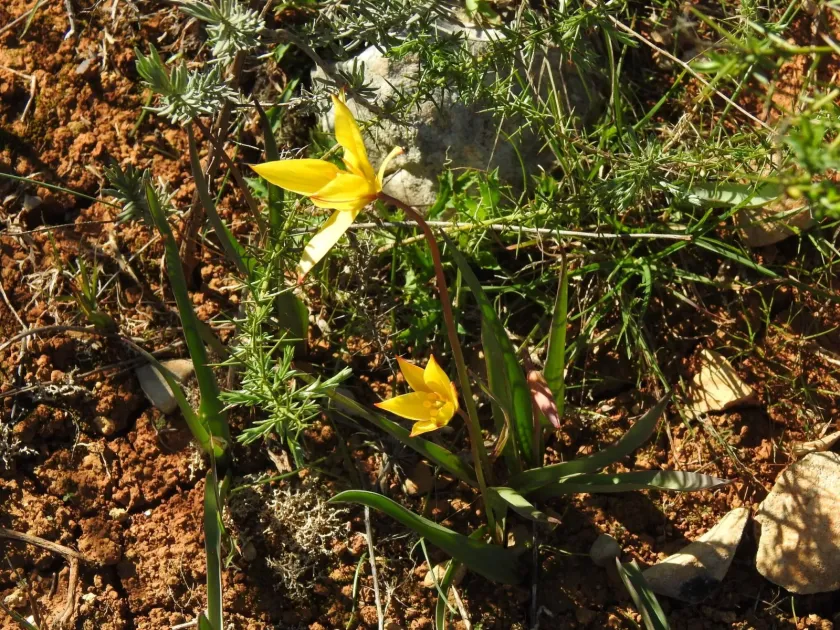
Description
Growing requirements
Bieberstein's tulip (Tulipa biebersteiniana) is a perennial bulbous plant belonging to the Liliaceae family. It is classified as a spring ephemeral, completing its entire growth and flowering cycle within a short period during the early spring.
The native habitat includes steppe regions and dry rocky hillsides across Eurasia. Due to its evolutionary background, the plant is highly adapted to high-light environments and thrives in areas with full sun exposure during the growing phase.
For successful growth, the species requires well-drained, sandy or loamy soil. It is intolerant of waterlogged conditions, which can quickly cause bulb decay, especially during the dormant summer months when the plant is not actively growing.
Climate requirements involve a distinct seasonality: cool, moist spring weather for foliage development and flowering, followed by a hot, dry summer period. This dry dormancy is essential for the bulb to mature and initiate floral buds for the following year.
Botanically, it is recognized by its solitary, star-shaped yellow flowers and slender, greyish-green leaves. The plants are relatively small, typically reaching heights between 15 and 40 cm, making them ideal for rock gardens or naturalized planting areas.
Main diseases and pests
The primary threats to this tulip are fungal pathogens, with Botrytis (grey mold) being the most common issue. This fungus thrives in cool, damp conditions and can rapidly destroy the foliage and buds of the plant.
Fusarium basal rot is another significant concern, leading to the decay of the bulb's root plate. Maintaining proper soil structure and preventing over-irrigation are the best strategies to avoid this soil-borne disease.
Pest pressure often comes from the onion fly, whose larvae tunnel into the bulb. This infestation often results in the plant failing to emerge or appearing stunted, eventually leading to the death of the bulb.
Bulb mites can also be problematic, especially in stored bulbs or soils with high organic matter content. They feed on the basal tissues, causing the plant to weaken and become susceptible to secondary viral or bacterial infections.
Voles and mice are natural predators that often feed on tulip bulbs during the winter months. Growers are advised to use wire mesh containers when planting to provide physical protection against these mammalian pests.