
Agenan tulip
Tulipa agenensis
Description
Growing requirements
The Agenan tulip (Tulipa agenensis) is a perennial bulbous plant belonging to the Liliaceae family. It is native to the Eastern Mediterranean region, specifically found across parts of the Middle East, including Turkey, Syria, Israel, and Jordan, where it thrives in rocky habitats.
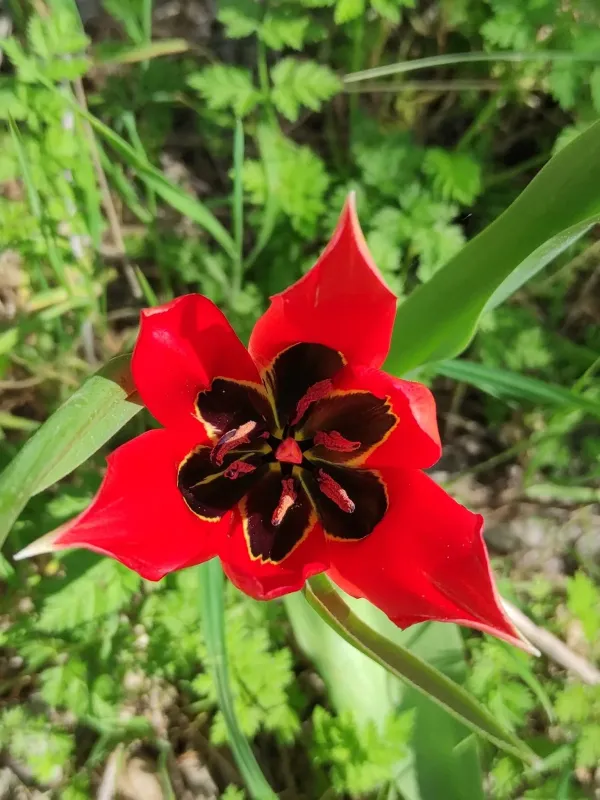
The plant is distinguished by its large, crimson-red flowers, which are marked with a prominent black center bordered by a yellow or light-colored band. Its leaves are broad, glaucous, and often have a characteristic wavy margin, contributing to its ornamental value.
Cultivation requires well-draining soil with a neutral or slightly alkaline pH to mirror its natural habitat. It is essential to ensure that the site does not collect excess water, as the bulbs are highly susceptible to rot when kept in saturated conditions for extended periods.
This species requires full sun exposure to thrive and develop its vibrant colors. Being adapted to a Mediterranean climate, the plant prefers a distinct seasonal cycle featuring cool, wet winters and hot, dry summers, which allows the bulbs to enter a necessary dormant phase.
Proper agronomic management involves light fertilization during the early spring growth phase. Maintaining adequate spacing between bulbs is also crucial to ensure sufficient air circulation, which helps reduce the humidity around the foliage and prevents the onset of fungal infections.
Main diseases and pests
The primary threats to the Agenan tulip are fungal diseases such as botrytis blight and fusarium rot. These pathogens thrive in stagnant, moist environments and can rapidly destroy the bulbs, necessitating the removal of affected plants to prevent spread to healthy specimens.
Insect pests, including bulb mites and various aphids, can also cause significant damage by feeding on the roots and developing sprouts. Integrated pest management, including chemical treatments for bulbs before planting, is standard practice for healthy crop production.