
Sulphur lily
Lilium sulphureum
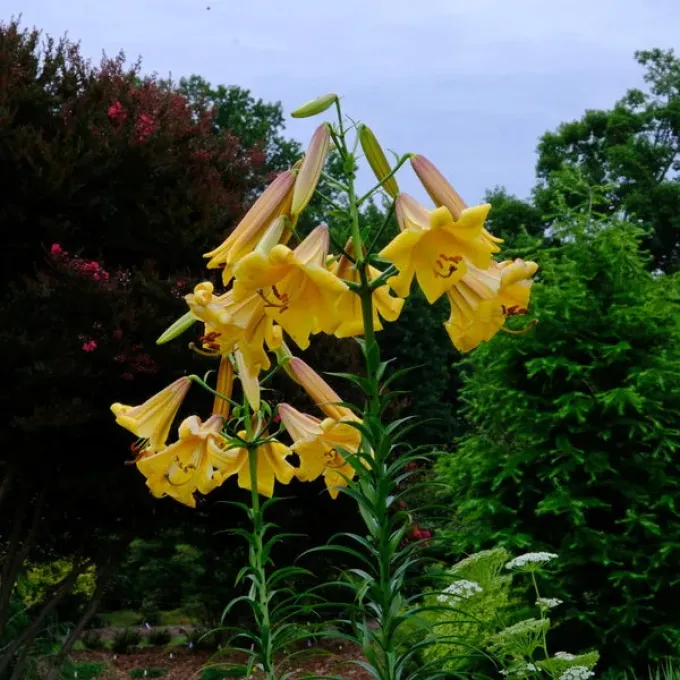
Description
Growing requirements
The Sulphur lily (Lilium sulphureum) is a member of the Liliaceae family. Originating from the mountainous regions of Myanmar, this species is highly valued for its massive, fragrant, trumpet-shaped flowers that display a distinct pale yellow or sulphur color.
Successful cultivation requires well-drained, fertile soil with a neutral or slightly acidic pH level. Because this species is sensitive to waterlogging, planting it on slightly raised beds or ensuring excellent soil drainage is critical to prevent bulb rot during the dormant season.
This plant thrives in full sun but prefers to have its root zone shaded. Providing mulch around the base helps keep the roots cool and maintains a consistent soil moisture level, which is essential during the active growing season from spring to mid-summer.
Temperature management is a key aspect of growing Lilium sulphureum. As a tender bulb, it requires protection from hard frosts. In cooler regions, gardeners often cultivate it in pots, moving them to a sheltered, frost-free environment once the foliage begins to die back in autumn.
Regular fertilization is necessary for optimal development. A balanced, slow-release fertilizer applied in early spring supports strong stem growth, while an extra application of potassium during the budding stage enhances the vibrant color and size of the blooms.
Main diseases and pests
The most common threats to the Sulphur lily include fungal diseases such as Botrytis elliptica (lily disease) and basal rot. These issues are typically exacerbated by high humidity, poor air circulation, and overhead irrigation practices.
Pest management should focus on monitoring for the lily beetle, which can defoliate plants rapidly, and aphids, which are potential vectors for mosaic viruses. Using systemic insecticides or manual removal is often necessary to maintain plant health throughout the season.