
Pyrenean lily
Lilium pyrenaicum
Description
Growing requirements
The Pyrenean lily (Lilium pyrenaicum) is a perennial bulbous plant belonging to the Liliaceae family. It is native to the mountainous regions of the Pyrenees, specifically spanning areas across Spain and France.
The plant thrives in well-drained, humus-rich soils with a neutral to slightly acidic pH. Proper soil structure is essential for the healthy development of the root system, preventing waterlogging which is detrimental to the bulbs.
In terms of climatic preferences, this species requires a cool, moist environment typical of high-altitude zones. It prefers partial shade rather than direct sunlight, especially during the hottest hours of the day to maintain leaf turgor.
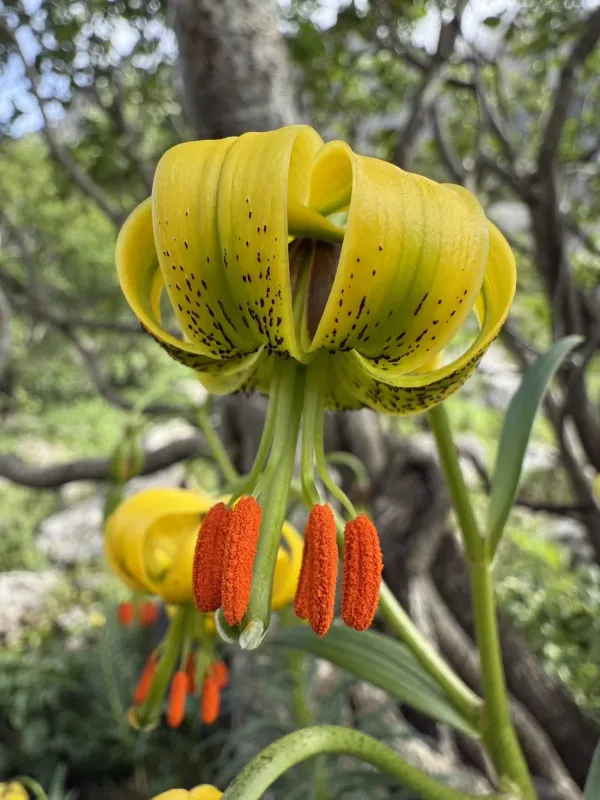
Botanically, the plant is identified by its sturdy stem reaching heights of up to 1.2 meters. The flowers are distinctive for their turban-like shape, featuring reflexed petals in vibrant yellow or orange hues, often decorated with dark spots.
In landscape architecture, the Pyrenean lily is used for its resilience and unique aesthetic. It is a preferred choice for rock gardens and woodland-style plantings where its naturalistic appearance complements surrounding perennials.
Main diseases and pests
The most significant pathological threat to Lilium pyrenaicum is Botrytis blight. This fungal infection thrives in high humidity and causes necrotic spots on leaves and stems, potentially destroying the flower display.
The lily beetle (Lilioceris lilii) is a primary insect pest that can cause substantial defoliation. Early detection is critical, as the larvae can strip a plant of its foliage in a matter of days if left unchecked.
Bulb rot and root mites are common issues when soil drainage is inadequate. These conditions are exacerbated during dormant winter months if the soil remains excessively wet and cold.
Effective management includes maintaining proper air circulation around the plants and avoiding overhead irrigation. If infection occurs, affected parts should be removed promptly to prevent the spread of spores.
Regular monitoring of the garden for the presence of beetles and early signs of fungal stress is standard practice for growers. Using organic neem oil or targeted insecticides can help maintain plant health throughout the season.