
Pontic lily
Lilium ponticum
Description
Growing requirements
The Pontic lily (Lilium ponticum) is a perennial bulbous plant belonging to the Liliaceae family. It is native to the mountainous regions of the Caucasus and northeastern Turkey, where it typically thrives in subalpine meadows and forest margins.
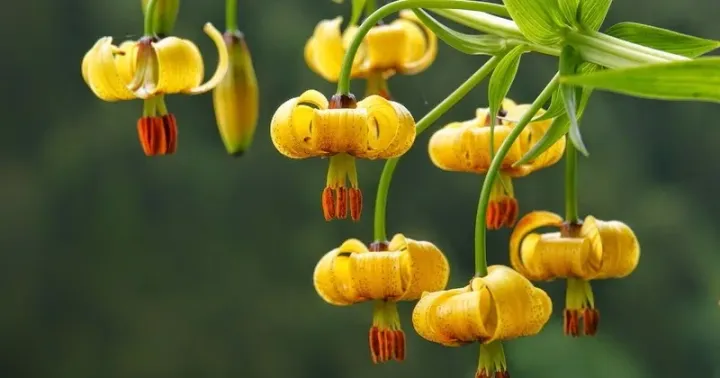
The plant features a sturdy stem that can reach heights of up to 90 cm, with attractive, dark green lanceolate leaves arranged in whorls. Its distinctive yellow or orange-spotted flowers provide significant ornamental value, blooming in mid-summer.
Successful cultivation requires well-draining, slightly acidic to neutral soil rich in organic matter. Gardeners must ensure that the site is not prone to waterlogging, as standing water during dormancy can lead to the rapid rotting of the bulbs.
These lilies prefer partial shade, which protects them from excessive heat, although they can adapt to sunnier conditions in cooler climates. Maintaining a consistent soil temperature is crucial for the healthy development of the bulb's root system.
Regular maintenance involves moderate watering during the growing season and ensuring good air circulation around the plants. After flowering, the foliage should be allowed to die back naturally to ensure the bulb stores sufficient energy for the following season.
Main diseases and pests
Botrytis, or gray mold, is a common fungal threat caused by high humidity and poor air movement. Preventive measures include maintaining appropriate spacing between plants and applying fungicides at the first sign of leaf spotting.
Fusarium wilt represents a significant risk for the bulb itself, often occurring in heavy, poorly drained soils. Using high-quality, disease-free bulbs and ensuring perfect drainage are the most effective strategies for preventing this infection.
The lily beetle is the most common pest that feeds on the foliage and can quickly cause severe damage. Regular inspection of the undersides of the leaves for eggs and larvae is essential, followed by manual removal or the application of suitable insecticides.
Aphids can also congregate on the flower buds, potentially spreading viral diseases. Integrated pest management, which includes encouraging beneficial insects, helps keep the population of sucking pests at a manageable level.
- Use of well-draining substrate.
- Annual mulching with organic compost.
- Systematic monitoring for pests.