
Henry's lily
Lilium henryi
Description
Sowing dates
Planting of Lilium henryi bulbs should ideally be performed in the autumn, during September or early October, allowing the roots to establish before the frost.
Spring planting is a viable alternative if the soil has sufficiently thawed, though it requires more diligent monitoring of soil moisture during the initial growth phase.
The planting depth should be approximately three times the diameter of the bulb, which generally ranges from 15 to 20 centimeters depending on the soil structure.
Maintaining proper spacing of about 30–40 centimeters between bulbs is essential to allow for adequate air circulation, which significantly reduces the risk of fungal blight.
Given the tall nature of the stems, planting should occur in sheltered areas where the plants are protected from strong winds that might break the heavy, flowering stalks.
Growing requirements
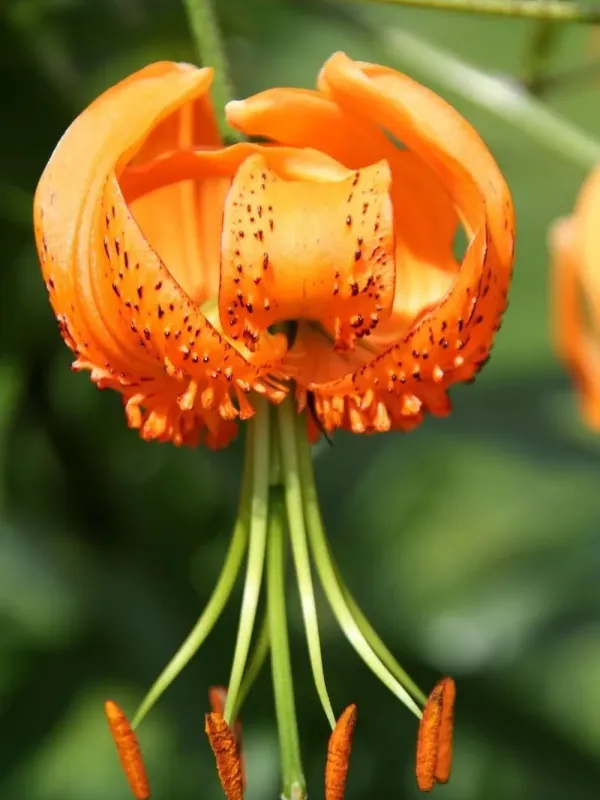
Henry's Lily, a member of the Liliaceae family, is renowned for its robust nature and distinctive, Turk's-cap-shaped orange flowers adorned with dark speckles.
The plant thrives in fertile, well-draining soils with a neutral or slightly acidic pH, as waterlogged conditions often lead to bulb rot and plant death.
While the species appreciates full sun, it performs exceptionally well in partial shade, especially in warmer climates where filtered light helps preserve the vivid bloom color.
Regular, consistent watering is required throughout the growing season, particularly during the stages of rapid stem development and the formation of flower buds.
Amending the soil with high-quality compost or well-rotted manure during site preparation provides the necessary nutrients for the lily to flourish over multiple seasons.
Main diseases and pests
The bulb fly is considered one of the primary pests, as its larvae feed on the bulb base, causing the plant to weaken and collapse suddenly during the growth cycle.
Botrytis, or grey mold, poses a significant threat in humid environments, manifesting as circular brown spots on the foliage and spreading rapidly if left unmanaged.
Fusarium wilt is a severe fungal disease that affects the bulb's health, requiring strict sanitation practices and the use of fungicide treatments during bulb preparation.
Spider mites can become problematic during hot, dry spells, necessitating regular inspection of the underside of the leaves to prevent significant sap depletion.
- Utilize systemic fungicides for soil disinfection.
- Practice annual crop rotation for bulb beds.
- Remove any decaying plant debris immediately.
- Ensure proper drainage to prevent pathogen growth.
Harvesting
Harvesting should only occur after the foliage has naturally turned yellow and died back, which typically indicates that the bulb has entered its dormant period.
Carefully lift the bulbs using a garden fork to avoid puncturing the delicate scales, which would make the plant susceptible to secondary infections during storage.
Once lifted, gently clean away loose soil and remove any damaged or diseased scales before letting the bulbs cure in a cool, dark, and well-ventilated location.
Store bulbs at low, consistent temperatures in a breathable medium like moist peat or vermiculite to ensure they remain plump and viable until the next planting season.
Divide the offsets carefully from the mother bulb during the harvest process to propagate new plants, ensuring each piece has enough root development to survive.