
Catesby's lily
Lilium catesbaei
Description
Growing requirements
Catesby's lily (Lilium catesbaei), also known as the pine lily, belongs to the Liliaceae family and is native to the southeastern United States. It naturally inhabits nutrient-poor, moist pine flatwoods and savannahs, reflecting a unique ecological adaptation to acidic and sandy soil environments.
This crop requires specific environmental conditions to thrive, primarily focusing on maintaining a balance between constant moisture and adequate drainage. The soil must be highly acidic, which is often a limiting factor in standard garden cultivation, necessitating the use of specialized growing media in pot or bed cultures.
Regarding light requirements, the plant is heliotropic and demands abundant direct sunlight to sustain its growth cycle. In its native range, it benefits from the dappled light of open pine forests, but when cultivated elsewhere, it must avoid heavy shading to prevent the weakening of the stem and reduction in flower production.
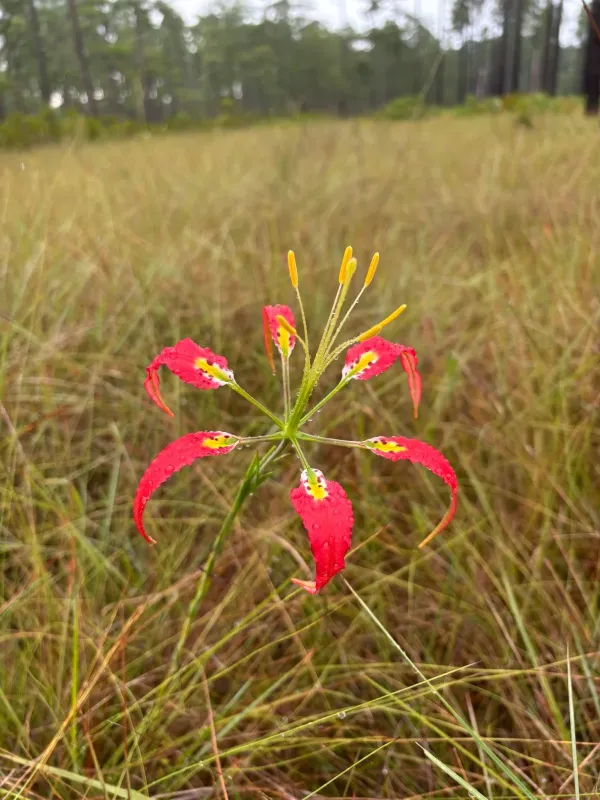
Botanically, the plant is characterized by a single, striking orange-red flower with a yellow-to-purple spotted throat. The structure is relatively slender, with a bulb that remains dormant during adverse conditions, making it essential for growers to recognize the timing of its active growth phase to provide appropriate hydration and nutrition.
The host usage of this lily is almost exclusively ornamental, specifically within the realm of native plant conservation and specialized botanical collections. It is not a commercial agricultural crop, but rather a species of scientific and aesthetic interest, valued for its rarity and specific biological requirements that challenge professional growers.
Main diseases and pests
The primary threats to Lilium catesbaei are root and bulb pathogens, particularly those triggered by poorly drained, anaerobic soils. Fungal infections such as Botrytis and various Fusarium species are common risks. Furthermore, site preparation must include monitoring for soil-borne pests that can destroy the delicate bulb, necessitating a proactive and preventative integrated pest management approach.