
Aurelian lily
Lilium aurelianense
Description
Growing requirements
The Aurelian lily (Lilium aurelianense) is a significant interspecific hybrid belonging to the Liliaceae family, resulting from a cross between Lilium henryi and Lilium sargentiae. This group of lilies is highly valued in horticulture for its robust constitution and impressive aesthetic appeal.
These lilies require well-drained, nutrient-rich soil to thrive. Ideally, the soil should be neutral to slightly acidic. Providing a site with excellent drainage is crucial, as the bulbs are susceptible to rotting if exposed to prolonged waterlogging during the dormant season.
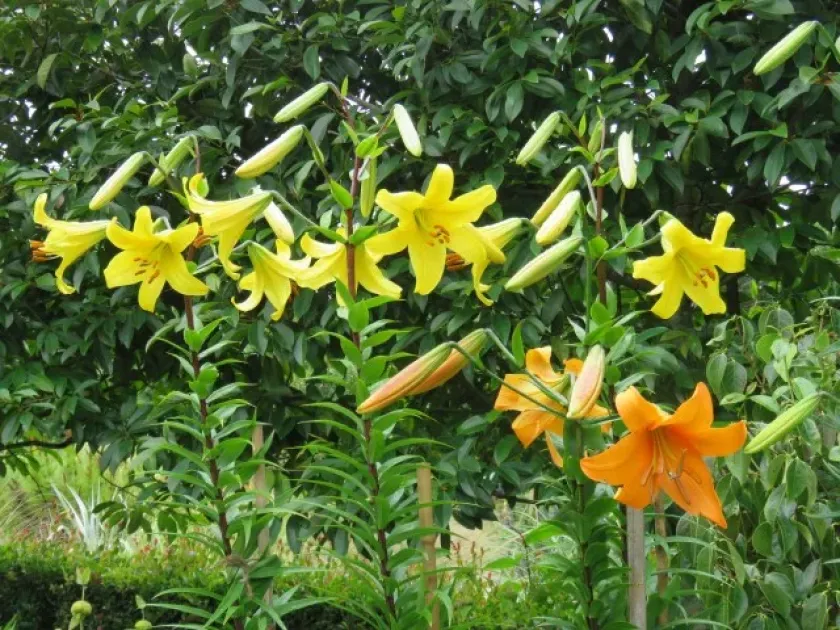
Botanically, the plant features a sturdy, tall stem and striking trumpet-shaped or funnel-shaped flowers with recurved petals. The colors often range from pristine white to vibrant shades of gold, yellow, and orange, often with contrasting throats.
Agrotechnical practices involve providing consistent moisture during the growing season while ensuring the bulb remains cool. Applying a layer of organic mulch helps retain soil moisture and prevents overheating of the root zone, which is vital for the health of the bulbs.
The primary use of the Aurelian lily is in commercial cut flower production and landscape gardening. Due to its hardiness and ability to adapt to various garden environments, it remains a favorite among breeders and enthusiasts looking for high-performance perennials.
Main diseases and pests
Botrytis, or gray mold, is a primary fungal concern, especially in humid or stagnant air conditions. To prevent the spread of the disease, growers should ensure proper spacing between plants and avoid overhead watering that keeps the foliage wet for extended periods.
Fusarium basal rot is another destructive pathogen that affects the bulbs directly. It is essential to ensure that bulbs are healthy before planting and to avoid replanting in soil that has previously hosted diseased lily bulbs to prevent long-term soil contamination.
The lily beetle is a common and aggressive pest that can rapidly defoliate the plants. Frequent monitoring and immediate removal of larvae or adults are necessary to maintain the plant's health throughout the spring and early summer flowering period.
Aphids are troublesome not only for the damage they cause by sucking sap but also as primary carriers of viral diseases. Implementing an integrated pest management strategy, including the use of horticultural oils, can help keep aphid populations under control.
Bulb mites can be a severe issue in storage, often leading to the degradation of the bulb scales. Maintaining proper storage hygiene, including adequate ventilation and temperature control, is critical to ensuring the survival and vitality of the stock for the next season.