
Asiatic lily
Lilium asiatic
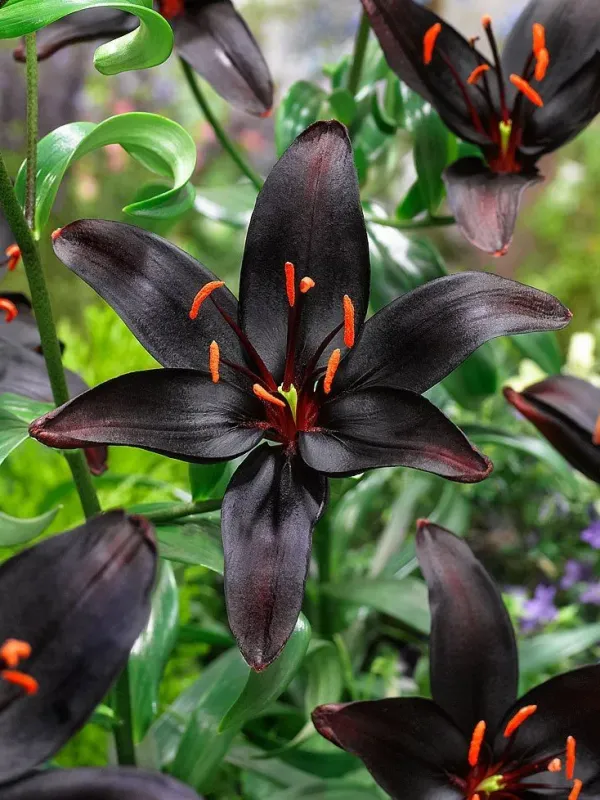
Description
Sowing dates
Asiatic lilies are preferably planted in the autumn, with September or early October being the ideal time when the soil temperature drops to +10...+12 degrees Celsius.
Spring planting is also acceptable, especially in regions with harsh winters, and should be carried out immediately after the soil thaws in April, allowing the bulbs to establish roots before summer heat.
The planting depth depends on the bulb size and soil type: large bulbs should be buried 15–20 cm deep, while smaller ones require 10 cm, maintaining a distance of 20–30 cm between plants.
When selecting a planting site, it is important to consider crop rotation; avoid planting lilies where other bulbous plants previously grew to minimize the risk of soil-borne pathogens.
The soil should be loose, well-drained, and rich in organic matter such as compost or peat to support vigorous development of the bulbs.
Growing requirements
Asiatic lilies belong to the Liliaceae family and are a result of selective breeding from East Asian wild species, which gives them excellent winter hardiness and adaptability to various climates.
This crop prefers well-lit, wind-protected areas, although the root zone requires light shading, which can be achieved by planting low-growing companion plants around the lilies.
The soil should be slightly acidic or neutral, as Asiatic hybrids are extremely sensitive to high lime content, which inhibits their growth and nutrient uptake.
Adequate drainage is critical: stagnant moisture during autumn and winter leads to bulb rot, so it is necessary to provide a sand layer under the bulbs in heavy clay soils.
During the active growing season, plants require moderate irrigation, especially during the budding and flowering phases, while avoiding overhead watering to prevent foliage diseases and burns.
Yield
The economic value of Asiatic lilies lies in their high ornamental appeal and suitability for industrial indoor forcing, providing early flower production for the market.
The production of offset bulbs in Asiatic hybrids is quite high, allowing for efficient natural propagation and a quick increase in the total planting area over a few seasons.
The flowering of most varieties begins in late June or July and lasts for two to four weeks, with a single stem producing between 10 to 15 buds in mature plants.
Cut flowers have good transportability and can last in a vase for 10–14 days, making them highly sought after in the professional floral industry.
To maintain stable yield quality and high-grade stems, it is recommended to transplant the bulbs to a new site every 3–4 years.
Main diseases and pests
The main threat to this crop is the lily beetle, which can quickly destroy the foliage, therefore regular inspections of the plantings and the use of insecticides are mandatory.
Among fungal diseases, botrytis (grey mold) is the most dangerous, manifesting as brown spots on leaves during periods of high humidity and sudden temperature changes.
Fusarium bulb rot is a hidden danger that leads to root system failure and premature stem wilting; it is best managed by preventative treatment of the bulbs before planting.
To prevent the spread of viral diseases like lily mosaic virus, always use sterilized tools during cutting and control insect vectors such as aphids.
- Regular plant inspection.
- Fungicide treatment early in the season.
- Removal of infected plant parts.
- Pest management.
- Adherence to crop rotation.
Harvesting
Cutting stems for bouquets should be done in the early morning hours, when the buds are just beginning to show color, ensuring maximum vase life for the flower.
When harvesting, it is crucial to leave at least two-thirds of the stem with leaves to ensure photosynthesis continues, which is necessary for the bulb to mature before winter.
Bulbs meant for storage or division should be lifted about a month after flowering, once the aerial parts begin to turn yellow and die back naturally.
The harvested bulbs should be cleaned, rinsed in a disinfecting solution, and dried in a shaded, well-ventilated area to prevent moisture loss.
Storage of the planting material is carried out in a cool, ventilated room, with bulbs packed in peat or dry sawdust to maintain an optimal microclimate.