
Reuter's fritillary
Fritillaria reuteri
Description
Growing requirements
Reuter's fritillary (Fritillaria reuteri) is a perennial bulbous plant belonging to the Liliaceae family. Originally native to Southern Europe, particularly regions of France, this plant has gained attention among collectors and gardeners for its unique, bell-shaped flowers and elegant appearance.
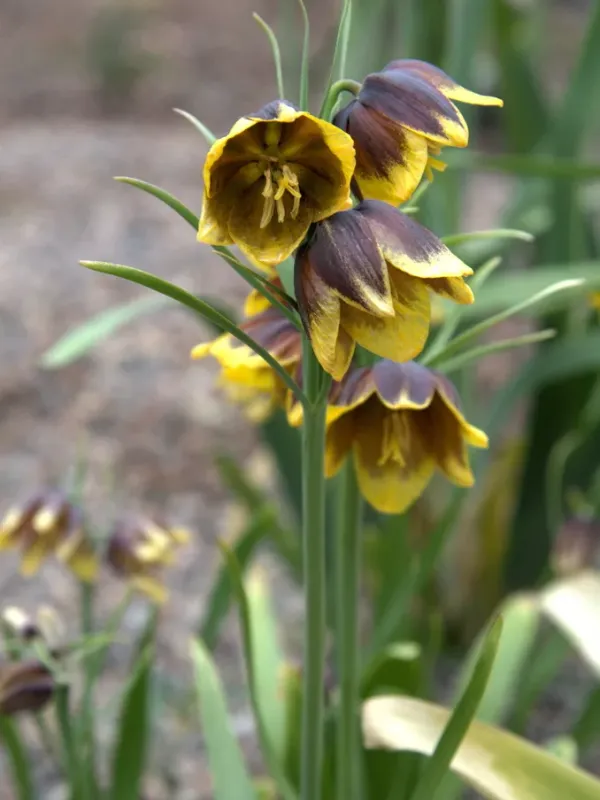
Botanically, this species typically reaches heights between 20 and 30 centimeters. Its slender foliage is accompanied by distinctive nodding flowers, which often display a sophisticated combination of purple and green hues, making it a valuable specimen for rock gardens and specialized borders.
The plant requires well-draining soil to thrive. In terms of agronomy, this is the most critical factor; waterlogged soil leads to bulb rot, which is the primary cause of failure in cultivation. Incorporating coarse sand or fine gravel into the planting site is highly recommended.
Regarding climate, Reuter's fritillary prefers a Mediterranean-like regime with a distinct warm, dry summer rest period. During this time, the bulbs benefit from being kept relatively dry, which helps trigger proper bud differentiation for the following year's growth cycle.
Successful cultivation also depends on the depth and timing of planting. Bulbs are generally planted in early autumn to allow for root establishment before the winter dormancy. A planting depth of approximately twice the diameter of the bulb is standard for this species.
Main diseases and pests
The main threats to the plant include various fungal infections, primarily those triggered by excessive humidity. Diseases such as Botrytis or crown rot can be mitigated by ensuring proper spacing between plants and avoiding excessive overhead watering during humid periods.
Insect pests include the scarlet lily beetle, which can significantly damage the leaves if left uncontrolled. Regular monitoring during the active growth phase in spring is essential, and manual removal or targeted biological control methods are often sufficient to manage populations.