
Yellow bells
Fritillaria pudica
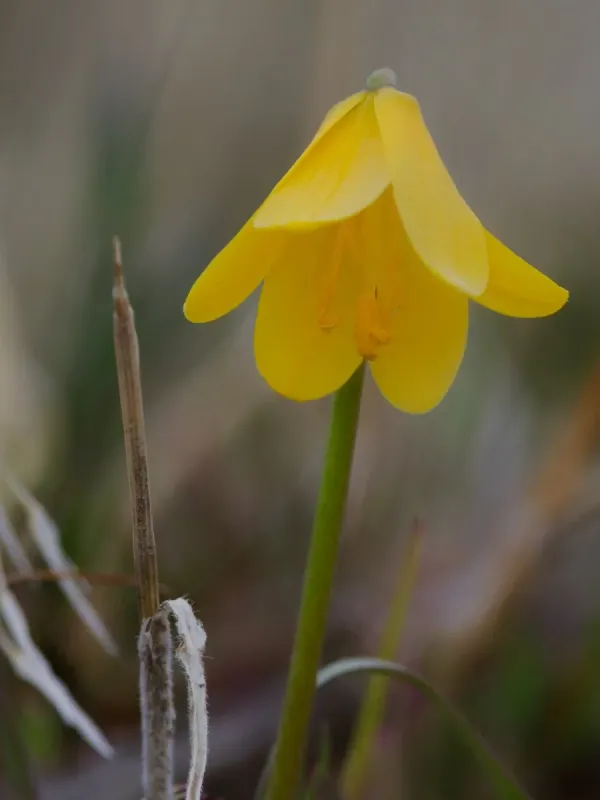
Description
Sowing dates
Planting of the bulbs is best performed in the autumn, allowing the roots to establish before the onset of deep winter freezing. A planting depth of 5 to 10 centimeters is recommended depending on the soil texture.
When propagating from seed, growers should sow fresh seeds in well-draining potting mix. The seeds require a period of cold stratification to break dormancy and trigger germination in the following spring season.
Space the bulbs at least 10–15 centimeters apart to allow for proper airflow and prevent competition for resources. Overcrowding often leads to stunted growth and increased susceptibility to fungal diseases among the colony.
Mulching the surface with a thin layer of fine gravel can mimic the natural mountainous habitat and help regulate soil moisture. This also acts as a protective barrier against soil crusting and inhibits the growth of unwanted weeds.
Attention should be paid to soil fertility, although this species does not require heavy fertilization. A light application of low-nitrogen, high-phosphorus fertilizer in early spring can boost flower production without promoting excessive vegetative growth.
Growing requirements
Yellow bells (Fritillaria pudica) is a perennial bulbous plant belonging to the Lily family (Liliaceae). It is celebrated for its pendulous, golden-yellow, bell-shaped flowers that bloom early in the spring, making it a prized specimen for rock gardens.
The species is native to the western regions of North America. Its natural habitat consists of dry sagebrush deserts, meadows, and rocky slopes, where it has evolved to thrive in environments with distinct wet and dry seasons.
For cultivation, Fritillaria pudica requires well-draining, gritty, or sandy soil. It is highly intolerant of waterlogged conditions, which will lead to bulb rot. The soil pH should be neutral to slightly alkaline to mimic its native landscape.
Climatic requirements involve a period of cold dormancy followed by a moist spring growing season. The plant excels in areas where it can receive full sun, although it can tolerate light shade in hotter, arid regions during the peak of summer.
As an ephemeral species, the plant enters a period of dormancy shortly after flowering and seeding. Providing a dry environment during the summer months is crucial for the health and longevity of the bulb, preventing the activation of dormant pathogens.
Main diseases and pests
The most significant threat to Fritillaria pudica is root and bulb rot caused by excessive soil moisture. Proper drainage is the single most important factor in maintaining a healthy population of this bulbous crop.
Pests such as voles and mice are known to feed on the bulbs, especially during the winter when other food sources are scarce. Utilizing wire cages or protective planting baskets is an effective strategy to mitigate such losses.
The lily leaf beetle is another potential threat, capable of causing defoliation that weakens the bulb's reserves for the subsequent year. Monitoring for the presence of larvae or adult beetles is essential during the active growing season.
Non-infectious physiological issues may arise if the plant is moved to an environment that does not provide the required summer drought. Proper location selection is paramount to ensuring the plant completes its life cycle correctly.
- Ensure excellent drainage for all plantings.
- Monitor for lily leaf beetle infestations.
- Use physical barriers to protect bulbs from rodents.