
Hermon fritillary
Fritillaria hermonis
Description
Growing requirements
The Hermon fritillary (Fritillaria hermonis) is a rare bulbous perennial belonging to the Liliaceae family. It is native to the high-altitude mountainous regions of the Hermon range, where it has evolved to thrive in specific rocky environments and Mediterranean highland climates.
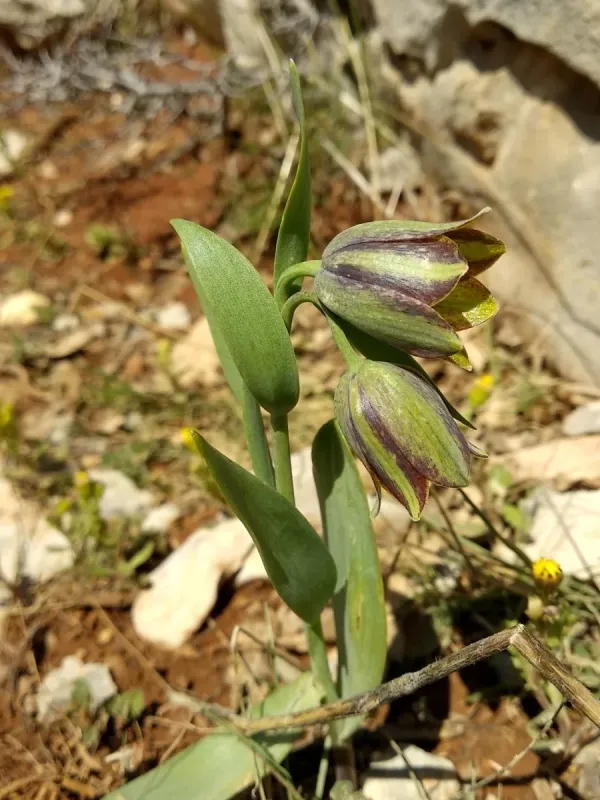
Botanically, this species is defined by a low-growing habit and solitary, pendant bell-shaped flowers. The perianth segments often display a subtle checkered pattern in shades of green, yellow, or deep purple, which is a hallmark morphological trait of the genus Fritillaria.
Cultivation of this species requires strict adherence to soil moisture management. It is essential to use well-drained, gritty, alkaline soil mixes that mimic the natural stony habitat. Any water stagnation is highly detrimental to the bulbs and often leads to physiological failure.
The plant performs best in locations with high light exposure but requires protection from extreme summer heat during its dormancy period. Providing a balance of cool nights and warm days throughout the growing season is crucial for successful plant development.
In terms of agricultural and horticultural utility, the Hermon fritillary is utilized exclusively in ornamental gardening. It is a prized specimen for alpine houses and specialist rock gardens, valued for its distinctive aesthetic and rarity within the botanical trade.
Main diseases and pests
The primary threats to the species include fungal pathogens such as Botrytis, which can quickly overwhelm the plant tissues under conditions of high humidity. Prophylactic measures include maintaining high air circulation and ensuring the substrate does not stay saturated.
Lilioceris lilii (lily beetle) is the most significant insect pest for this culture, capable of rapid defoliation. Additionally, small subterranean rodents can cause extensive damage to bulbs, necessitating the use of wire mesh baskets for protection during planting.