
Greek fritillary
Fritillaria graeca
Description
Growing requirements
The Greek fritillary (Fritillaria graeca) is a herbaceous perennial bulbous plant belonging to the Liliaceae family. It is native to the rocky landscapes and mountainous regions of Greece and the Balkan Peninsula.
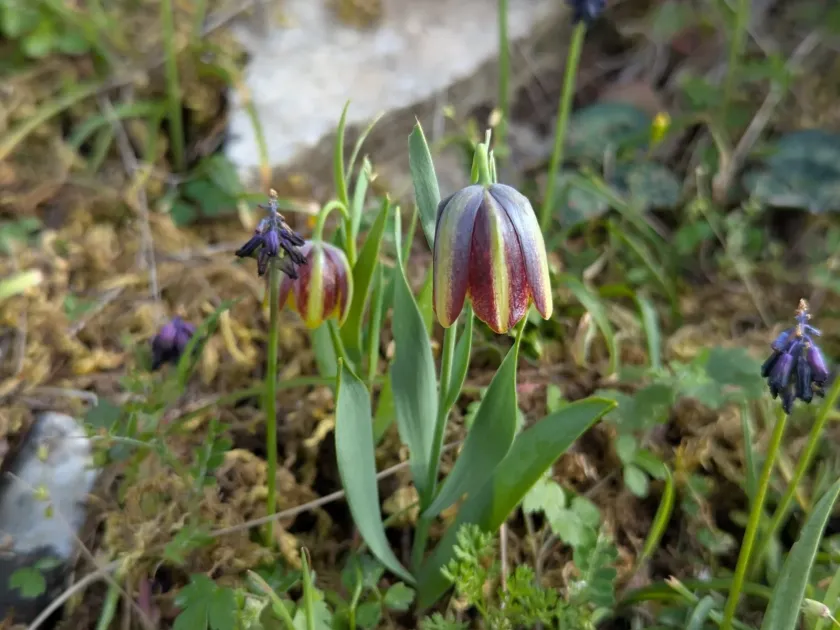
Botanically, the plant is distinguished by its short stem and solitary, bell-shaped flowers. The petals often feature a distinctive checkered pattern in various shades of brown, purple, and green, which is characteristic of the genus.
Optimal growth requires well-draining, stony, or sandy soil conditions. The plant is highly sensitive to waterlogged environments, which can lead to rapid bulb decay, necessitating excellent drainage in garden beds or containers.
This species thrives in sunny, open locations that mimic its native Mediterranean habitat. It is highly adapted to dry summers, which constitute the dormant phase of the plant, requiring warmth and low humidity during this period.
In terms of agricultural and horticultural use, the Greek fritillary is valued exclusively as an ornamental plant. It is widely used in rock gardens, alpine displays, and specialized bulb plantings where its unique color patterns are appreciated.
Main diseases and pests
The primary threats to this culture are fungal diseases, particularly bulb rot triggered by excess moisture. Proper site selection and soil aeration are the most effective methods for preventing such infections.
Pests such as lily beetles can cause severe defoliation if left uncontrolled. Integrated pest management strategies, including monitoring and appropriate pesticide application, are recommended to maintain plant health throughout the growing season.