
Elwes' fritillary
Fritillaria elwesii
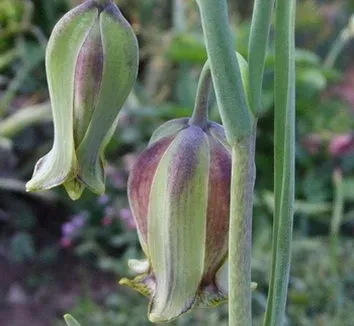
Description
Sowing dates
Planting of Elwes' fritillary bulbs should occur in late summer or early autumn, ensuring the bulbs establish roots before the ground freezes.
Bulbs should be placed at a depth of 10 to 15 centimeters, which provides sufficient protection against fluctuating soil temperatures during winter.
Optimal spacing between individual plants is approximately 15 to 20 centimeters to allow for proper airflow and root development.
It is recommended to incorporate a layer of grit or sharp sand at the bottom of the planting hole to enhance drainage and prevent rot.
Mulching the soil surface after planting helps maintain stable moisture levels and protects the emerging shoots from early spring frosts.
Growing requirements
Fritillaria elwesii belongs to the Liliaceae family and is native to the rocky, well-drained slopes of southwestern Turkey.
This species thrives in sunny, open locations that mimic its natural mountainous habitat, though it can tolerate partial shade in hot climates.
Soil composition must be loose, fertile, and exceptionally well-drained, as the bulbs are highly susceptible to damage in waterlogged conditions.
The climate requirements involve a distinct cycle of a moist, cool spring for growth followed by a dry, hot summer for bulb dormancy.
Understanding these environmental needs is essential, as the plant uses its dormancy period to store energy for the following season's bloom.
Main diseases and pests
The primary threats to this crop include fungal infections, such as bulb rot, which are triggered by stagnant water and inadequate drainage.
Botrytis or grey mold may develop on the foliage during periods of high humidity and poor ventilation, requiring prompt horticultural attention.
Pests such as aphids and bulb mites can compromise the plant's health, necessitating regular monitoring throughout the active growing cycle.
Slugs and snails are known to damage young foliage and shoots during the early spring, often requiring physical barriers or organic controls.
Maintaining clean garden hygiene and avoiding deep cultivation near the bulbs helps reduce the risk of mechanical damage and secondary infections.