
Davis fritillary
Fritillaria davisii
Description
Sowing dates
The Davis fritillary (Fritillaria davisii) is a member of the Liliaceae family. It is a perennial bulbous plant that is typically planted in the autumn months, specifically during September or October, to allow root establishment before winter.
When planting, it is essential to choose a site with excellent drainage. The bulbs should be set at a depth of approximately 8–10 centimeters in loose, well-aerated soil to ensure optimal bulb health.
Vegetative propagation via offsets is the preferred method for this species. This task is undertaken during the dormant phase, after the foliage has fully withered and turned yellow.
Seed cultivation is possible but requires professional patience, as seeds need stratification at low temperatures for several months. Flowering usually does not occur until the plant is 4 to 5 years old.
When arranging these in a garden setting, ensure adequate spacing. Proper air circulation between plants is necessary to prevent the accumulation of moisture, which is the primary enemy of bulbous plants.
Growing requirements
Native to the Mani Peninsula in Greece, the Davis fritillary thrives in Mediterranean-like conditions. It requires a position in full sun or partial shade where the soil warms up effectively in the spring.
The ideal soil for this species is lime-rich, stony, and exceptionally well-draining. The plant cannot tolerate stagnant water, as it quickly leads to root and bulb rot during the winter dormancy period.
During the active growing season, moderate irrigation is required. However, once the flowers fade and the leaves dry, the plant enters a period of dormancy, and the ground must be kept mostly dry.
The plant has specific thermal needs and is sensitive to extreme frost. In colder climates, growers should apply a layer of mulch or protective covering to insulate the bulbs during sub-zero temperatures.
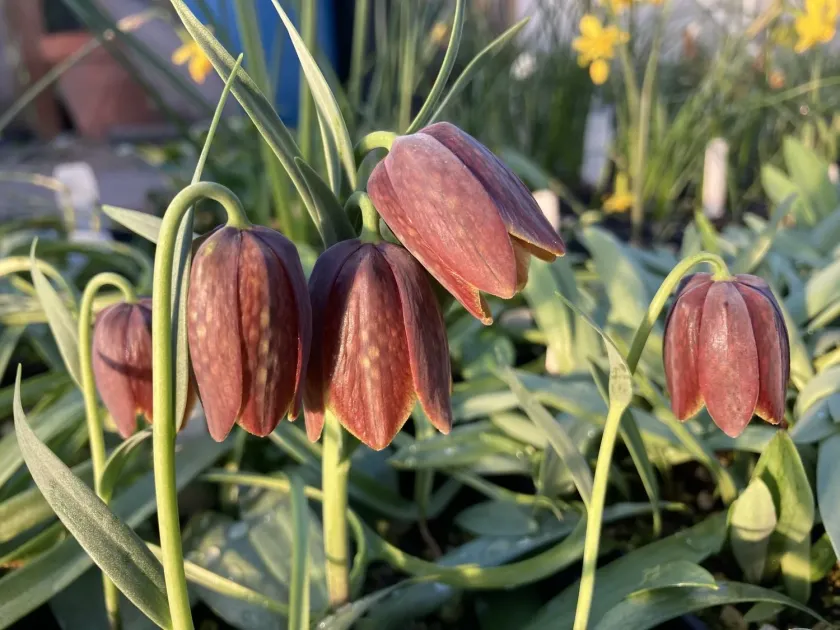
This species is used exclusively in ornamental horticulture. Its unique, nodding, bell-shaped flowers with reddish-brown to yellow hues make it a prized specimen for collectors and specialized garden displays.
Main diseases and pests
Fungal pathogens, particularly gray mold and Fusarium, are significant threats to the Davis fritillary. These conditions develop rapidly in damp environments and cause the bulbs to decay from the basal plate upwards.
The scarlet lily beetle (Lilioceris lilii) is the most destructive pest for this plant. It feeds aggressively on foliage and flower buds, potentially destroying the plant's health if not treated promptly.
Onion flies can also damage the subterranean parts of the plant. Regular monitoring of the foliage and preventive treatment of bulbs with fungicide before storage are recommended best practices.
Rodents, including voles and mice, may forage for the bulbs, especially during winter months when other food sources are scarce. Protective measures like subterranean mesh cages are often utilized.
To ensure plant vigor, avoid excessive nitrogen fertilization and heavy mulching with fresh compost, as these can promote pathogen growth and weaken the plant's natural resistance.