
Conical fritillary
Fritillaria conica
Description
Growing requirements
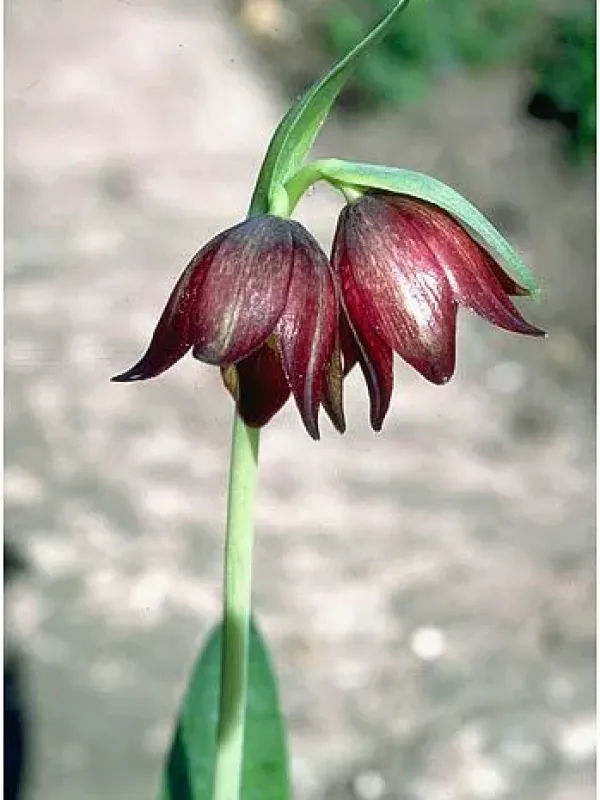
The Conical fritillary (Fritillaria conica) is a rare bulbous perennial plant belonging to the Liliaceae family. It is endemic to Greece, specifically restricted to the island of Kythira, making it a highly prized plant for botanical enthusiasts.
Botanically, it features a small bulb and an elegant stem carrying unique cone-shaped flowers. This distinctive geometry sets it apart from more common garden varieties of the genus Fritillaria.
For successful growth, this species requires environmental conditions that mimic its native Mediterranean habitat. It thrives in well-drained, gritty, or sandy soils where water does not accumulate during the dormant season.
It prefers full sun exposure to thrive. However, due to its specialized nature, gardeners must ensure the site is protected from excessive rainfall, as the bulbs are highly susceptible to rot when kept in damp, heavy soil conditions.
The economic value of this plant is primarily horticultural and ornamental. It is mainly used in specialized rock gardens, alpine houses, and private collections where its rare status and aesthetic appeal are highly valued.
Main diseases and pests
The most common disease affecting Conical fritillary is fungal rot, specifically Botrytis, which thrives in conditions of high humidity and poor air circulation around the base of the plant.
Pest management focuses primarily on the scarlet lily beetle (Lilioceris lilii), which can cause severe damage to foliage and flower buds if not controlled during the spring growth phase.
To prevent disease outbreaks, it is essential to provide excellent drainage and avoid overhead watering. Utilizing a sterile, gritty soil mix significantly reduces the risk of bulb decay.
Insect control involves manual removal of larvae or the application of selective insecticides if the infestation becomes critical. Always monitor for early signs of feeding to prevent structural damage.
Cultural control, such as removing debris and ensuring adequate spacing between individual plants, helps maintain hygiene and reduces the survival rate of common pathogens and pests.