
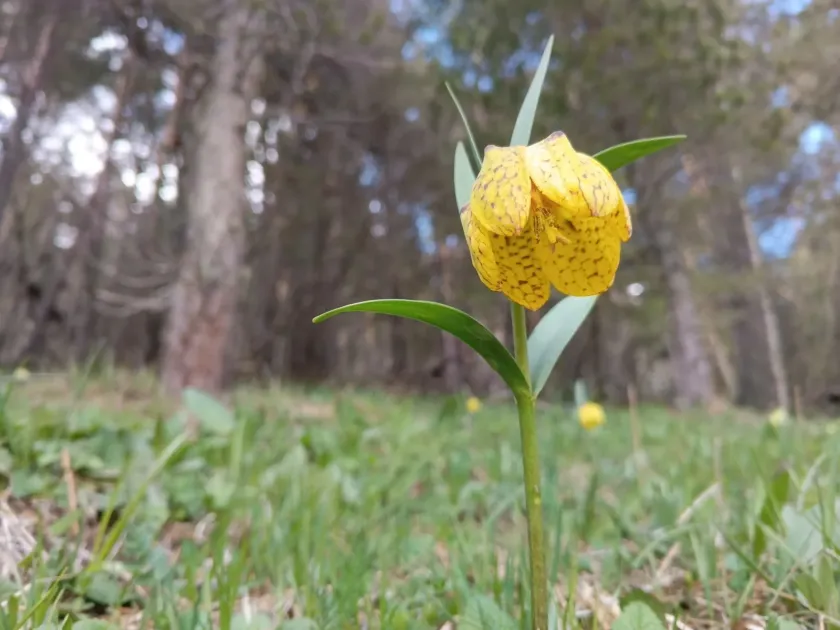
Yellow fritillary
Fritillaria collina
Description
Growing requirements
Yellow fritillary (lat. Fritillaria collina) is a perennial bulbous plant belonging to the Liliaceae family. It originates from the Caucasian mountain regions, which determines its specific physiological requirements. In professional horticulture, it is highly valued for its early spring bloom and unique aesthetic qualities.
The culture requires excellent soil drainage and aeration. Ideal conditions include loose, fertile sandy loams or loams with a neutral pH level. Because the plant is naturally adapted to mountain slopes, water stagnation in the root zone is fatal, often leading to rapid bulb rot. Installing a coarse sand or gravel drainage layer is mandatory during planting.
Yellow fritillary thrives in full sun but prefers sites with light afternoon shade in warmer climatic zones. It is well-adapted to cool mountain springs, meaning that successful cultivation depends on avoiding extreme overheating of the soil. Consistency in temperature helps the plant maintain a steady growth rate until the end of the vegetative season.
Agricultural management requires careful weed control and soil surface aeration. The root system is extremely sensitive to mechanical damage, so manual weeding should be kept to a minimum. Applying an organic or mineral mulch layer helps suppress weeds and maintains the stable temperature and moisture levels required for optimal bulb health.
Fertilization should be focused on phosphorus and potassium to support vigorous flower production and healthy bulb division. Nitrogen application should be limited to the early growth phase to avoid excessive foliage growth at the expense of bulb strength. After the foliage dies back, water must be withheld to ensure a mandatory dormant phase.
Main diseases and pests
The main pathological threats include fungal infections such as Fusarium wilt and various bulb rots. These are primarily caused by excessive soil moisture during the dormant season and poor ventilation of the storage facilities where bulbs are kept during the off-season. Fungicide treatment of bulbs before planting is an essential preventative measure.
Pest management focuses on the lily beetle (Lilioceris lilii) and onion fly larvae. The lily beetle can defoliate entire patches if left unmanaged, requiring periodic inspections and, if necessary, the application of targeted insecticides. Proper field hygiene and the removal of plant debris help reduce pest pressure significantly.