
Mission bells
Fritillaria biflora
Description
Growing requirements
Mission bells (Fritillaria biflora) is a distinctive bulbous plant belonging to the Liliaceae family. Native to California, this species is well-adapted to Mediterranean-type climates, characterized by wet, mild winters and distinctly hot, dry summer seasons.
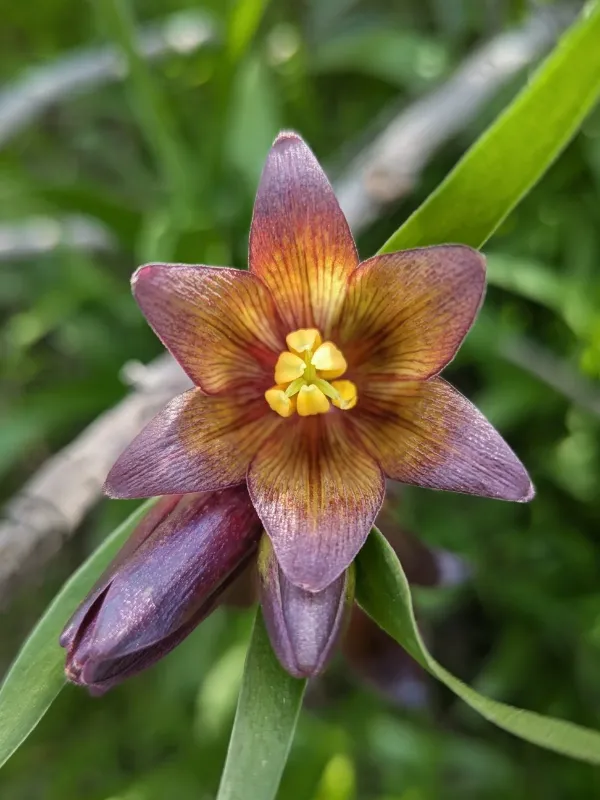
Botanically, the plant features a slender stem reaching heights of 20 to 50 centimeters, adorned with lanceolate leaves. The most striking characteristic is the bell-shaped flowers, which typically exhibit deep, moody tones ranging from dark chocolate to deep purple, often with subtle greenish tints.
Cultivation requires strict adherence to soil moisture management. The species thrives in well-draining, gritty soils that allow for rapid water runoff. In garden settings, planting in raised beds or well-drained slopes is highly recommended to prevent the bulb from rotting during the dormant season.
The plant demands a high-light environment, preferably full sun to partial shade, to support its early spring growth cycle. Adequate exposure to sunlight is essential for the bulb to accumulate enough energy reserves for the following season's blooms, making location selection a priority.
In horticultural practice, Fritillaria biflora is primarily utilized as a specialty ornamental plant. It is a prized addition for rock gardens and specialized bulb collections due to its unique appearance and the relatively low density of its foliage, which keeps the focus on the floral display.
Main diseases and pests
The primary threats to Fritillaria biflora include fungal pathogens, particularly those responsible for bulb rot such as Fusarium. These issues are almost exclusively linked to poor drainage or excessive irrigation during the summer months when the plant is biologically programmed to rest.
Pest pressures include bulb-feeding mites and, occasionally, soil-dwelling larvae that target the root system. Good sanitation practices, such as treating bulbs with fungicides before planting and maintaining a clean soil environment, are essential for ensuring a successful and long-lived floral display.