
Fritillaria aurea
Fritillaria aurea
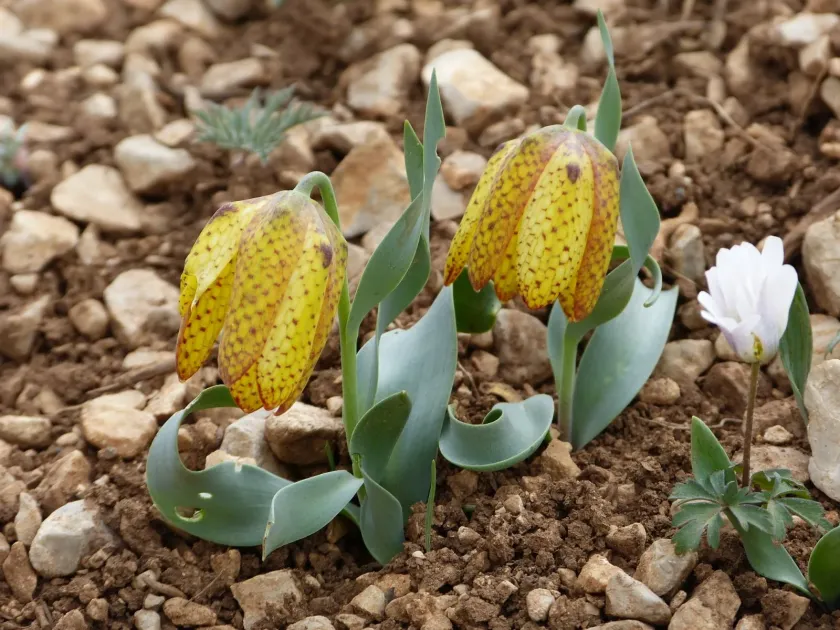
Description
Sowing dates
The ideal time for planting Fritillaria aurea bulbs is late summer or early autumn, typically between late August and September, to allow for root establishment.
Bulbs should be planted at a depth of 10 to 12 centimeters, ensuring the soil is well-drained to prevent the bulb from rotting during the winter months.
Choosing the right location is crucial; these plants thrive in spots that offer full sun to light shade, provided the area is protected from strong winds.
Spacing the bulbs at least 15 to 20 centimeters apart is recommended to ensure adequate air circulation and to prevent overcrowding in the flower bed.
Applying a light layer of mulch immediately after planting helps to maintain consistent soil moisture and provides essential thermal insulation for the developing bulbs.
Growing requirements
Fritillaria aurea is a charming member of the Liliaceae family, known for its distinct golden-yellow, checkered flowers that appear in early spring.
The plant performs best in fertile, loamy, and loose soils with a neutral pH, as it is highly sensitive to waterlogged conditions that can damage its root system.
During the active growth phase, it is essential to maintain consistent moisture, although the soil should never become excessively wet or stagnant.
Fertilization with balanced mineral fertilizers during the budding phase significantly promotes healthier foliage and more vibrant, long-lasting blossoms.
While relatively cold-hardy, the plant benefits from a protective cover of organic materials during particularly harsh winters to survive freezing temperatures.
Main diseases and pests
Gray mold and other fungal infections are the primary threats to this species, usually caused by poor drainage and high humidity levels around the foliage.
The lily beetle is a well-known pest that can rapidly defoliate the plant, requiring frequent monitoring and timely intervention to save the crop.
Soil-dwelling larvae such as wireworms may feed on the bulbs, which can stunt plant growth and sometimes lead to the total loss of the individual bulb.
Preventive treatment of bulbs with appropriate fungicides before planting is the most effective strategy to minimize the risk of soil-borne diseases.
Regular inspection and the use of targeted systemic insecticides are necessary to manage pest populations before they cause irreparable damage to the plants.
Harvesting
Harvesting or lifting the bulbs should occur only after the foliage has fully yellowed and dried, indicating that the plant has stored energy for the next cycle.
Once lifted, the bulbs must be carefully cleaned of excess soil, separated from offsets, and dried in a shaded, well-ventilated area to prevent fungal development.
For storage, keep the bulbs in a cool, dry environment with good airflow, ideally at temperatures between 15 and 18 degrees Celsius until the next season.
Periodically digging up and replanting the bulbs every three to four years helps to reduce congestion and maintains the vigor of the plant population.
Before storing, it is crucial to cull any soft or diseased bulbs to ensure that the remaining healthy stock remains infection-free throughout the storage period.