
Assyrian fritillary
Fritillaria assyriaca
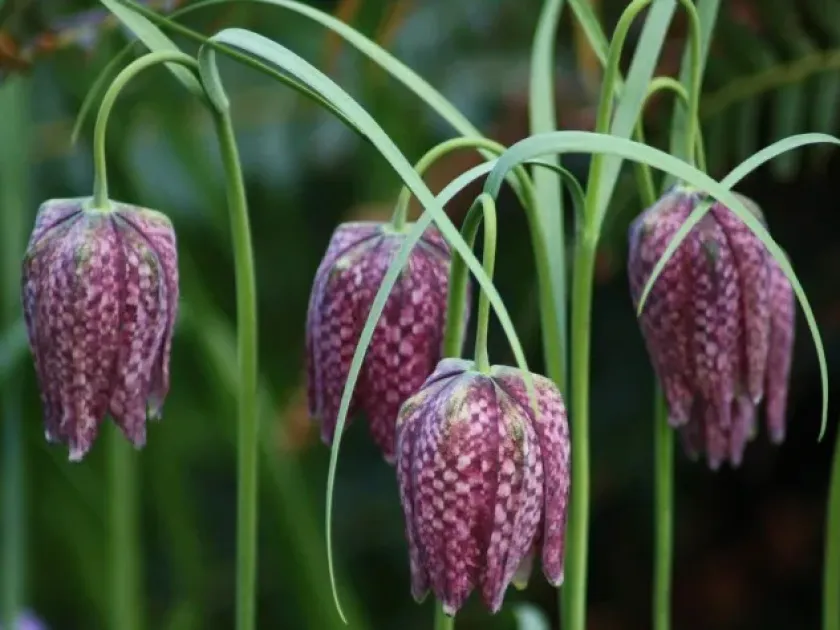
Description
Sowing dates
Planting of Assyrian fritillary bulbs should be carried out in the autumn, typically between September and October, to ensure root establishment before winter.
The optimal planting depth is approximately 10-15 centimeters, which is usually three times the diameter of the bulb, ensuring stability and protection from temperature fluctuations.
A layer of coarse river sand should be placed at the bottom of the planting hole to provide essential drainage and prevent bulb decay caused by excess water.
Spacing between bulbs should be kept at 15-20 centimeters to allow for healthy development of the root system and to provide sufficient nutrients for the plant.
After planting, the soil should be lightly watered to settle it, but avoid overwatering, as the bulbs are susceptible to rotting during the initial rooting phase.
Growing requirements
The Assyrian fritillary is an elegant member of the Liliaceae family, native to the rocky, arid habitats of Turkey, Iraq, and Iran.
This species thrives in sunny locations with well-drained, fertile, and slightly alkaline or neutral soil that mimics its natural mountain environment.
Good soil structure is vital; heavy, water-retentive clay soils should be amended with organic matter and drainage materials to prevent root suffocation.
Although it enjoys sunlight, the plant benefits from some protection during the hottest part of the day to prevent the foliage from drying out prematurely.
Maintenance involves minimal intervention during the dormant period, as the bulbs prefer to remain dry while they are not actively growing.
Main diseases and pests
The primary concern for growers is the fungal decay of bulbs, often triggered by waterlogged conditions or poor air circulation around the root zone.
The scarlet lily beetle is a significant pest that can defoliate the plant quickly, drastically reducing the vigor of the bulb for the following season.
Rodents, particularly field mice, may feed on the bulbs during dormant periods, necessitating the use of wire mesh baskets for protection during planting.
Viral infections can sometimes occur, typically resulting in stunted growth or discolored foliage, and such plants should be removed to prevent further spread.
Integrated pest management, including monitoring and timely application of protective measures, is essential for maintaining a healthy and robust plant population.
Harvesting
Seed harvesting should take place only after the seed pods have fully dried and begun to split naturally on the stem, indicating maturity.
Lifting the bulbs for division or propagation is best done in the summer, once the foliage has turned yellow and withered completely, signifying dormancy.
Bulbs must be cleaned of old roots and soil, then stored in a cool, dry, and well-ventilated location to prevent moisture accumulation and premature sprouting.
Care should be taken during storage to keep the bulbs in a breathable container, such as a mesh bag or a shallow wooden crate with wood shavings.
For cut flower production, harvest the stems when the buds are fully colored but not yet open, which ensures maximum longevity in floral arrangements.