
Armenian fritillary
Fritillaria armena
Description
Sowing dates
The best time to plant the bulbs is in the early autumn, typically late August through September. This timing allows the bulbs to establish a healthy root system before the onset of winter dormancy.
Planting depth should generally be about 8 to 10 cm, depending on the specific bulb size. Proper spacing of 10–15 cm ensures that the plants have enough room to spread and develop effectively over several seasons.
Growing requirements
The Armenian fritillary (Fritillaria armena) is a perennial bulbous plant belonging to the Liliaceae family. It is native to the mountainous regions of Armenia, Turkey, and Iran, where it thrives in rocky terrain and alpine meadows.
This crop requires well-draining, light, and sandy soil to prevent bulb rot. On heavy clay soils, it is critical to implement a drainage layer of grit or coarse sand to ensure that moisture does not stagnate around the bulbs during the dormant season.
Fritillaria armena is highly adaptable to temperate climates and prefers full sun or partial shade. It is cold-hardy and well-suited for rock gardens, where it can experience natural growth cycles without requiring significant winter protection.
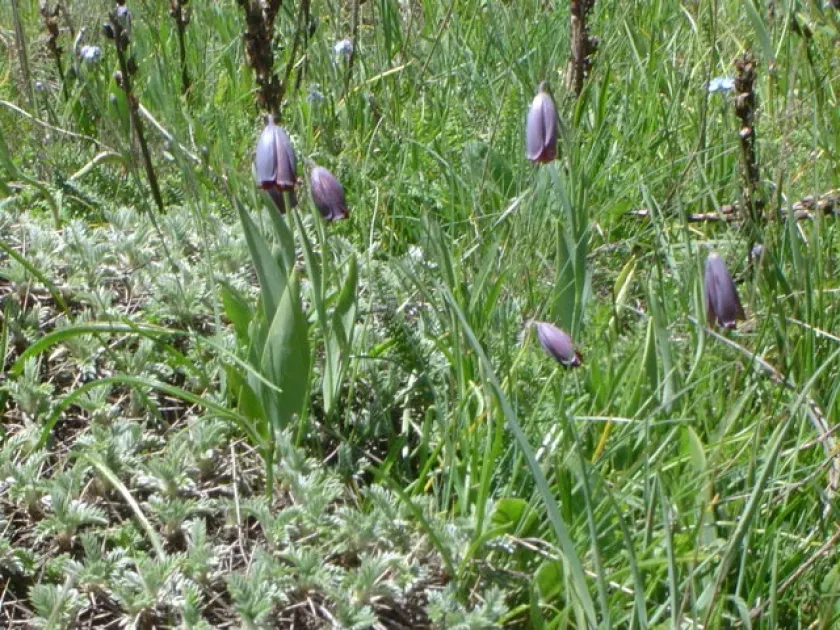
Botanically, the plant is distinguished by its short stature, typically growing 15 to 20 cm tall. It features slender, lanceolate leaves and pendant, bell-shaped flowers that are usually yellow, providing a vibrant display in early spring.
In terms of agricultural and horticultural use, this species is cultivated as an ornamental plant. Its compact size and early flowering make it an excellent choice for rockeries, alpine beds, and naturalized lawn plantings in garden landscapes.
Main diseases and pests
The most common pest affecting this species is the scarlet lily beetle, which feeds on the foliage and can quickly defoliate the plants. Manual removal of larvae and adult beetles, combined with systemic insecticides, is recommended for effective control.
Fungal diseases, especially gray mold (Botrytis), pose a risk if soil moisture is excessive. Maintaining proper aeration and choosing a well-drained planting site are primary preventive measures to protect the bulbs from rotting and decay.