
Caucasian fawn lily
Erythronium caucasicum
Description
Growing requirements
The Caucasian fawn lily (Erythronium caucasicum) is a perennial bulbous plant belonging to the Liliaceae family. It is a typical spring ephemeral, completing its vegetative cycle rapidly before entering a deep dormancy phase during the summer months.
Its natural range is limited to the mountainous forests of the Caucasus region, where the plant thrives in rich, humus-based soils under the shelter of deciduous trees. It is highly adapted to the specific microclimates of forest clearings and woodland edges.
Cultivation requires conditions that mimic its natural habitat: partial shade and cool, moist soil are essential. Direct exposure to intense summer sun can cause the bulb to overheat or dehydrate, negatively impacting the plant's future development.
The soil must provide excellent drainage while retaining sufficient moisture. A slightly acidic to neutral substrate, enriched with well-rotted leaf mold, is ideal. Avoid waterlogged soils, as they are the primary cause of failure in cultivating this species.
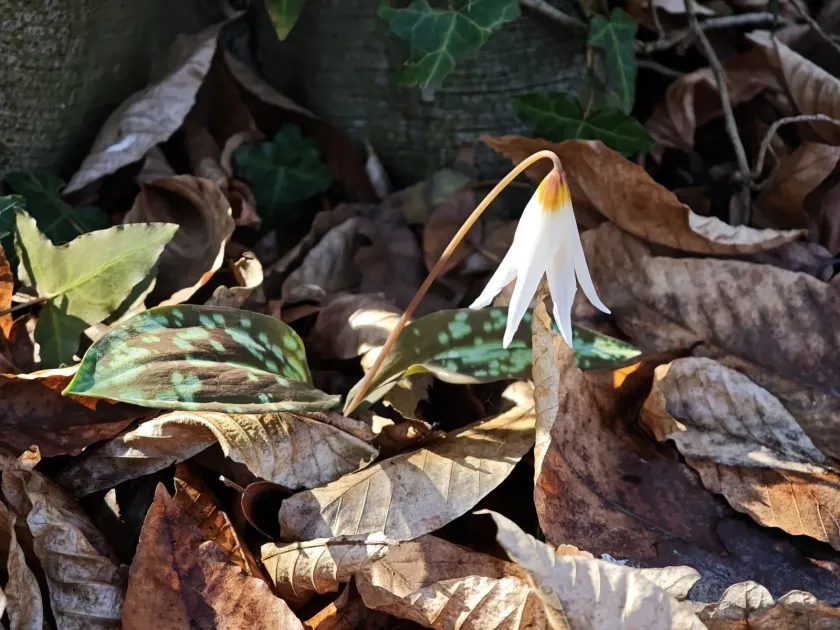
Botanically, it is distinguished by two mottled basal leaves and elegant nodding flowers, usually white or creamy-yellow. Proper care involves minimal disturbance of the bulbs, which prefer to remain in the same spot for several years to establish colonies.
Main diseases and pests
Small rodents, such as voles and mice, represent the primary threat to Caucasian fawn lily bulbs. Protecting planting sites with fine-mesh wire cages is a standard practice to prevent these animals from consuming the dormant bulbs.
Fungal diseases are the most common health issue, particularly root and basal rot caused by poor drainage or excessive soil moisture. Proper site selection and soil preparation are the best preventative measures against these pathogens.
Viral infections can affect the plants, often leading to stunted growth or discolored leaves. Because there is no cure for these viruses, infected plants should be promptly excavated and destroyed to prevent the virus from spreading.
Inadequate airflow can contribute to fungal outbreaks. Maintaining a clean garden bed by removing weeds and debris ensures better ventilation and reduces the humidity around the emerging foliage.
Preventive maintenance, including the application of fungicides during early spring growth, can help protect the plants from soil-borne diseases and promote more robust development throughout the short flowering season.