
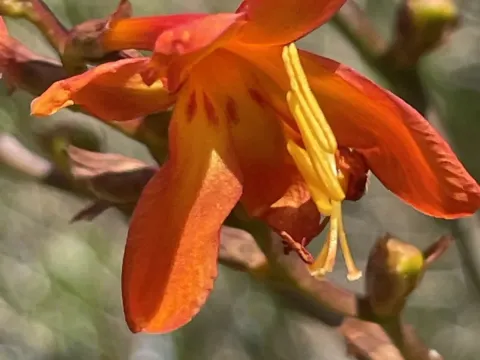
Crocosmia
Crocosmia
Planting Crocosmia in open ground is carried out in the spring when the soil warms up to +10°C, which usually happens at the end of April or May.
What the section contains

Crocosmia
In southern regions, late autumn planting is possible, but in temperate climates, it is better to plant the bulbs in spring to avoid freezing during the dormant period.
Corms are buried in prepared soil at a depth of 7–10 centimeters, maintaining a distance of about 10–15 centimeters between plants for proper aeration.
When using the seedling method, seeds are planted in containers in February or March, providing the crop with sufficient lighting and warmth.
After the first true leaves appear, the seedlings are pricked out and transferred to the ground only after the threat of spring frosts has passed.
Crocosmia belongs to the Iridaceae family and is a perennial cormous plant native to the tropical regions of Southern Africa.
The crop prefers well-lit, sunny areas, as it stretches out in the shade and almost completely ceases to bloom.
The plant is demanding regarding soil composition: it develops best in light, fertile, humus-rich loams with a mandatory drainage layer.
An important requirement is the absence of standing water at the roots, as excessive moisture leads to rapid rotting of the corms in the ground.
During the period of active vegetation, Crocosmia needs regular watering, especially during dry and hot weather in the summer months.
The main diseases of the crop are fungal infections, such as Fusarium wilt and gray mold, caused by waterlogging of the substrate or the planting site.
Pests that pose a threat to vegetative parts include spider mites, mole crickets, thrips, and various species of aphids that suck plant juices.
To prevent rot, it is necessary to strictly observe the watering regime and use high-quality planting material without visible damage.
Upon detection of the first symptoms of viral diseases or deep rot, affected specimens are subject to immediate removal and destruction.
To protect against insect pests, broad-spectrum insecticidal preparations are used, applied according to the schedule during the growing season.
Harvesting planting material or digging up corms for the winter in regions with harsh climates is done after the aerial part of the plant turns completely yellow.
Usually, this process occurs in the second half of October, when the plant prepares for a state of physiological rest before temperatures drop.
The corms are carefully cleaned of soil residues and dried in a well-ventilated room at a moderate temperature until a protective crust forms.
Storage is carried out in a cool, dry place at a temperature of +5°C to +8°C, covered with peat or dry sawdust to prevent drying out.
It is important to regularly inspect the stored material to timely discard bulbs showing signs of rotting or mold development.