
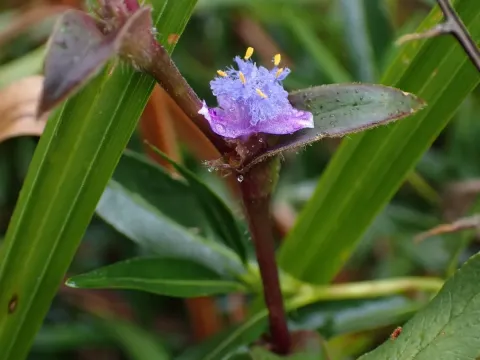
Cyanotis
Cyanotis
Cyanotis is a genus of perennial herbaceous plants belonging to the Commelinaceae family. Native to the tropical and subtropical regions of Africa and Asia, these plants have evolved to thrive in diverse environments, ranging from moist habitats to arid, rocky slopes.
What the section contains

Cyanotis
Botanically, the plant is characterized by its trailing or ascending stems, which are often covered in dense, soft trichomes. The foliage is diverse, with several species displaying striking silver, purple, or variegated patterns, making them highly prized in horticulture for decorative purposes.
To successfully cultivate Cyanotis, an ambient temperature between 20–25°C must be maintained. As a frost-sensitive plant, it is grown primarily in greenhouses or as a seasonal indoor plant in temperate regions where external cold poses a significant threat to its survival.
The ideal soil requirement involves a well-draining, lightweight substrate. Because the root systems of Cyanotis are sensitive to waterlogging, it is essential to provide adequate drainage to ensure proper aeration and prevent moisture-related physiological stress.
Economically, the plant is utilized extensively in landscaping and indoor gardening. Furthermore, there is growing scientific interest in the genus due to the presence of ecdysteroids, which serve as precursors for pharmaceuticals and have applications in modern biotechnological research.
The primary pests affecting Cyanotis are spider mites and mealybugs, particularly when the plant is kept in low-humidity environments. Maintaining proper air circulation and monitoring the plants closely are essential for preventing significant pest infestations.
Root rot remains the most serious disease, usually caused by overwatering and compacted soil. Avoiding water accumulation in the potting medium and ensuring the use of sterile, well-draining substrates are the most effective strategies for long-term health of the crop.