
Cyanotis axillaris
Cyanotis axillaris (L.) D. Don
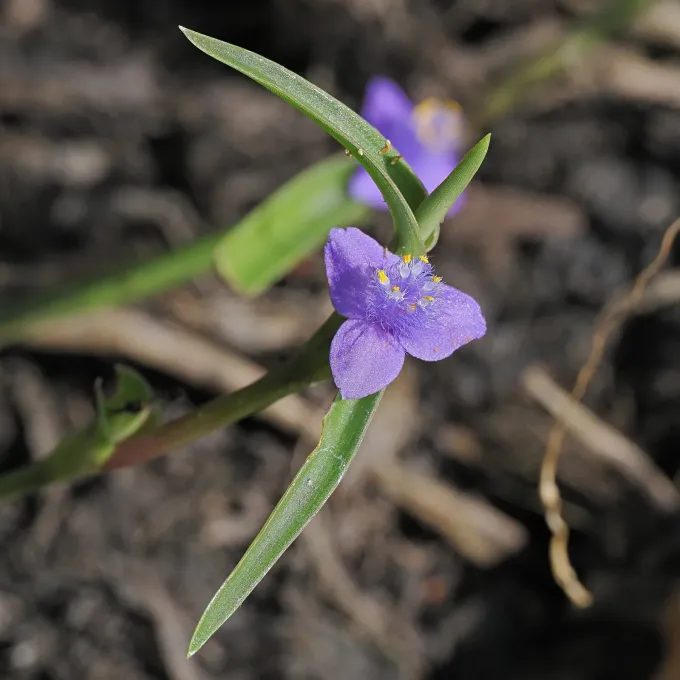
Description
Sowing dates
Cyanotis axillaris is an annual herbaceous plant belonging to the Commelinaceae family. In its native tropical regions, sowing is typically initiated at the start of the monsoon season, when soil temperatures consistently range between 20 and 25 degrees Celsius.
Optimal sowing requires a well-prepared seedbed with fine tilth, allowing for uniform germination. Seeds should be sown in rows spaced approximately 30 to 40 centimeters apart to prevent overcrowding and ensure adequate ventilation.
The recommended planting depth is shallow, usually between 1 and 2 centimeters, as small seeds require limited soil cover to successfully reach the surface and initiate photosynthesis.
Adequate moisture is essential immediately following sowing to trigger germination. In larger agricultural systems, irrigation is often applied during the first week to ensure consistent moisture levels until seedlings are established.
Early-stage growth is characterized by rapid development of the root system, which quickly anchors the plant and allows for the vigorous production of the leafy biomass that defines this crop.
Growing requirements
The plant thrives in warm, tropical climates, requiring temperatures between +22 and +30 degrees Celsius for optimal growth. It is highly intolerant of frost and significant temperature drops, which can halt development entirely.
Soil requirements include well-drained, fertile sandy loams or loamy soils. While the plant is often found near water, it requires good drainage to prevent waterlogging, which can lead to rapid root degradation.
Water availability is a critical factor in the cultivation of Cyanotis axillaris. While it prefers moist environments, it needs steady and reliable rainfall or supplementary irrigation to maintain its lush foliage throughout the growing season.
Light intensity plays a major role in biomass accumulation. While it can survive in partial shade, the plant performs best in full sunlight, which encourages dense branching and greater leaf surface area.
Fertilization with a balanced NPK ratio, particularly focusing on nitrogen to promote leaf growth, is recommended for maximizing yields in intensive cultivation systems, ensuring the crop remains vibrant and healthy.
Main diseases and pests
Common agricultural pests affecting the crop include various lepidopteran larvae that feed on the foliage. Early detection is vital to prevent defoliation and significant reduction in biomass yield.
Fungal pathogens such as powdery mildew and root rot represent the most significant disease threats, especially in areas with poor airflow and high humidity levels during the mid-season.
Crop rotation is essential for disease management, as continuous cropping on the same plot can lead to the accumulation of soil-borne pathogens that severely impact long-term production quality.
Weed management is critical in the early stages of growth, as the plant can easily be outcompeted by aggressive grasses and broad-leaved weeds before the canopy closes over the rows.
Integrated pest management, including the use of biological control agents, is preferred to maintain the ecological balance and avoid chemical residues on the harvested biomass intended for fodder.
Harvesting
Harvesting is typically timed just before or at the onset of the flowering stage, which ensures the highest concentration of nutrients and optimal quality for agricultural or medicinal use.
Mechanical harvesting is conducted by cutting the foliage at a height of 5 to 10 centimeters above the soil level, which stimulates regrowth and enables multiple cuttings within a single growing season.
Post-harvest processing involves immediate drying in well-ventilated, shaded areas to reduce moisture content rapidly, thereby preventing the growth of molds and protecting the structural integrity of the plant.
The harvested product is valued as a forage supplement for livestock, and recent studies suggest potential applications in traditional medicine due to its specific alkaloid content.
Final storage requires dry and clean facilities to maintain quality. Given the hygroscopic nature of the dried plant material, it is crucial to protect the yield from environmental moisture to prevent spoilage.