
Basket plant
Callisia fragrans (Lindl.) Woodson
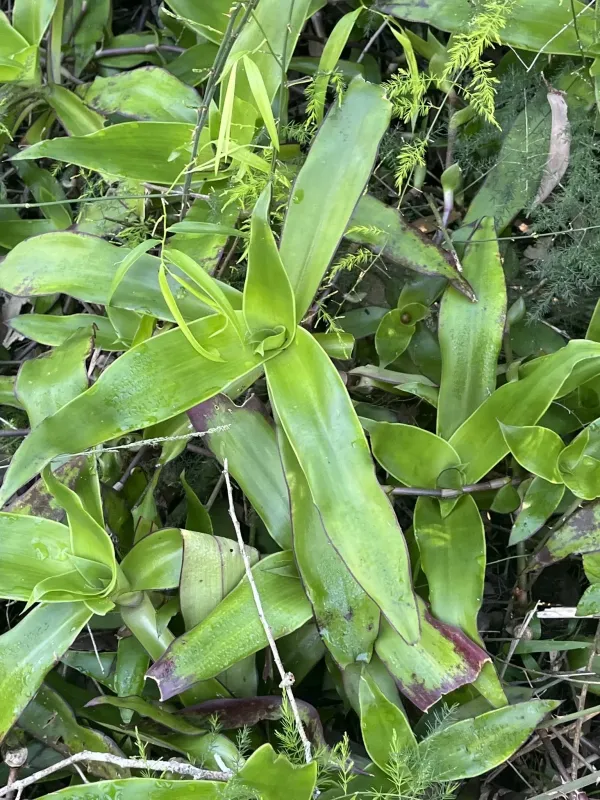
Description
Growing requirements
Callisia fragrans, commonly known as the basket plant, is a perennial herbaceous species belonging to the Commelinaceae family. Native to tropical regions of Mexico and the West Indies, it has become a popular ornamental and medicinal plant worldwide.
The plant features long, lance-shaped leaves forming a dense rosette, with distinct creeping stolons or runners that can extend significantly. These runners, often called "mustaches," are characteristic of the species and are the primary means of propagation.
Environmental conditions require bright, indirect sunlight to maintain health. While it can survive in partial shade, excessive direct sun will scorch the foliage, whereas insufficient light leads to spindly growth and loss of the plant's characteristic robustness.
Temperature management is critical: the species thrives in a range of 20–25°C. It is strictly a non-hardy plant that must be kept away from frost and freezing temperatures, which cause irreversible damage to the succulent tissues.
The ideal soil substrate should be well-aerated and nutrient-rich, typical of a standard potting mix with added perlite or sand. Drainage is essential to prevent water stagnation in the root zone, which the plant does not tolerate well.
Yield
In terms of production, the basket plant is harvested for its high content of ecdysteroids and other secondary metabolites used in alternative medicine. The growth cycle allows for frequent harvesting of runners once they develop the required length and nodes.
Yield productivity is maximized by providing sufficient space for runner extension. Greenhouse cultivation is the preferred method for year-round production, ensuring consistent light and moisture levels for optimal biomass accumulation.
Main diseases and pests
Common pests include spider mites and mealybugs, which tend to infest the plant in low-humidity environments. Regular misting and physical inspection are recommended to mitigate these risks effectively.
Root rot and stem blight are the most significant threats, usually triggered by poor drainage or overwatering. Maintaining a proper watering regime and ensuring the pot allows for excess water discharge are the primary defense strategies.